

Audio Version of Article:
Table of Contents
- Introduction
- Location and Process
- The Eight Steps
- 3.1. Opening Act – Citrate Formation
- 3.2. The Remix – Isocitrate
- 3.3. Energy Drop – First Oxidation
- 3.4. Encore – Second Oxidation
- 3.5. Merch Stand – ATP Creation
- 3.6. The Power-Up – Third Oxidation
- 3.7. Hydration Station – Malate
- 3.8. The Finale – Oxaloacetate
- Conclusion
1. Introduction
The Krebs Cycle, also known as the Citric Acid Cycle or Tricarboxylic Acid (TCA) Cycle, is a cornerstone of cellular respiration. Named after Hans Krebs, who was awarded the Nobel Prize in 1953 for its discovery, this cycle is the cellular engine that drives the production of energy in the form of ATP.
2. Location and Process
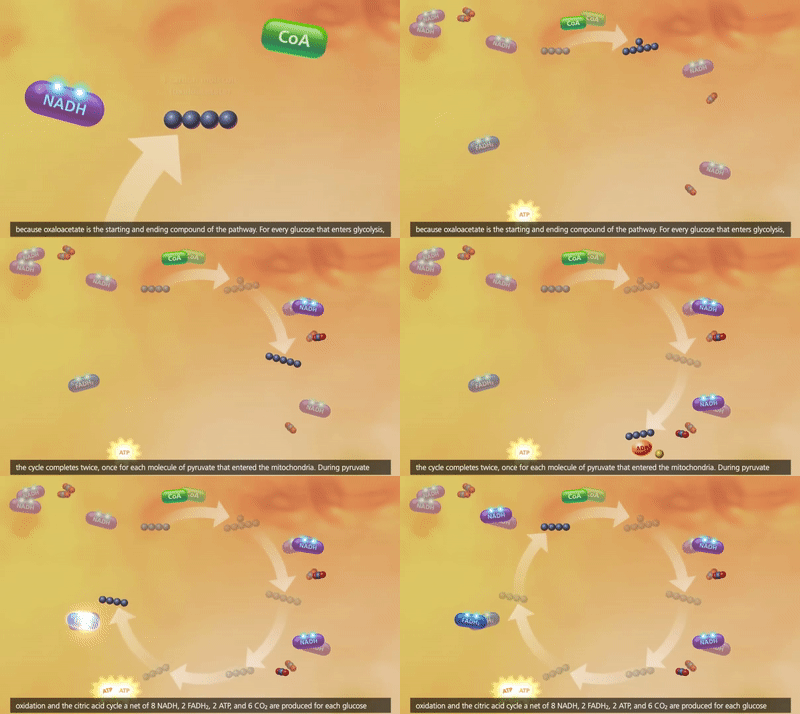
Occurring within the mitochondrial matrix of eukaryotic cells, the Krebs Cycle comprises a sequence of enzyme-catalyzed reactions. It initiates with Acetyl-CoA, a molecule sourced from carbohydrates, fats, and proteins. As it enters the cycle, Acetyl-CoA is transformed through eight distinct steps, culminating in the release of energy and carbon dioxide.
3. The Eight Steps: Krebs Cycle as the Cell’s Music Festival.
Envision each cell in your body as a miniature music festival, with the Krebs Cycle being the main event. Here’s the exciting lineup:
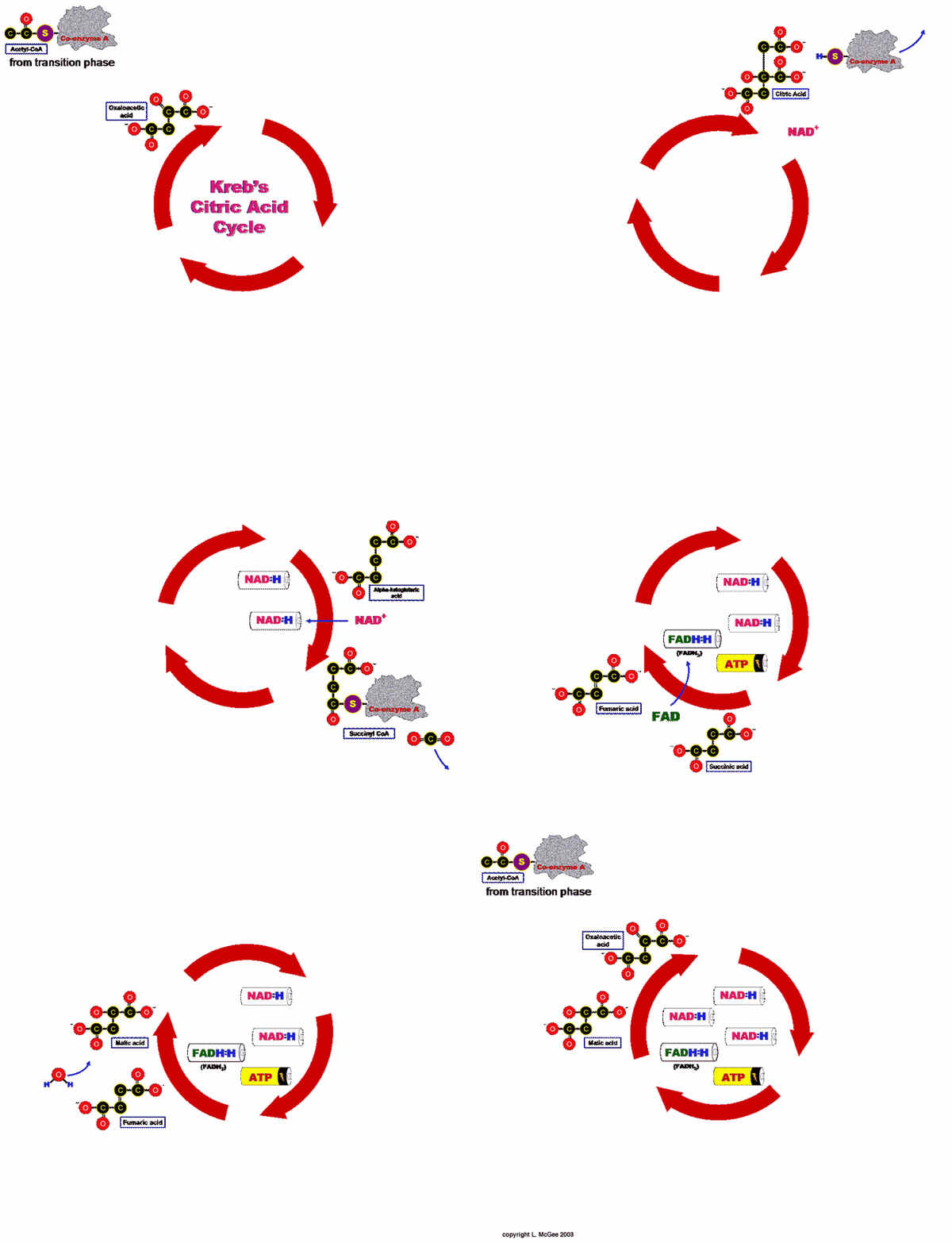
- Opening Act – Citrate Formation: Acetyl-CoA teams up with Oxaloacetate to kick things off, creating Citrate. 🎤
- The Remix – Isocitrate: Citrate gets remixed into Isocitrate, keeping the energy high and the crowd moving.
- Energy Drop – First Oxidation: Isocitrate drops some CO2 and hands over energy to NAD+, creating NADH. 🎚️🎉
- Encore – Second Oxidation: Alpha-Ketoglutarate follows up with another CO2 release and energy handoff, keeping the vibe alive. 🙌
- Merch Stand – ATP Creation: Succinyl-CoA turns into Succinate, and in the process, we score some ATP – the festival currency for all the cell’s needs. 💵
- The Power-Up – Third Oxidation: Succinate upgrades to Fumarate, and FAD becomes FADH2, like getting a VIP pass for more energy. 🎫
- Hydration Station – Malate: Fumarate grabs a water molecule to become Malate, because staying hydrated is key, even for cells! 💦
- The Finale – Oxaloacetate: Malate finishes strong, turning back into Oxaloacetate, and the cycle is ready for another round. 🔄
4. Conclusion:
And that’s the Krebs Cycle, the never-ending festival in your cells that keeps the energy flowing and the party going. If you’re down for more fun facts or need anything else, just holler! Enjoy the cellular music festival! 🎶. Do like share and subscribe for more such interesting topics…👩🔬🧑🔬❤️❤️
Attempt the quiz below to know how much you understood about this article.🙂🙂
Get our latest posts in your inbox.


 Lifestyle Science & health