If I had to list my top 5 grocery store items, it feels almost impossible! I mean, who sticks to just five? We all know the struggle walking into a store for one thing and walking out with a cart full of extras. It’s just natural!
Let’s try to break it down into essentials.
Credit : Shutterstock.com ( Essential groceries )
For Vegans: 1. Rice and Wheat – Staples for most meals.🍚🥙 2. Vegetables & Fruits – Fresh produce is a must!🥦🍎🥑🌶 3. Spices – Because food without flavor is no fun.🧂🍛🥗 4. Pulses and Cereals – Protein and fiber-packed. 🫘 5. Tea or Coffee – A daily ritual for many.☕️🫖🍵
For Non-Vegans: All vegan product mentioned above including Eggs – Perfect for quick meals and baking.🥚🍳 Fish and Meat – Protein-rich and versatile.🥩🍗🍤🍣
Other Essentials (Because life is unpredictable):
Cooking Oils: Can’t sauté without it!🥥 Snacks: A little treat for the soul.🍕🍿 Dairy or Plant-based Milk: For your tea, coffee, or cereal.🥛
Of course, this is just scratching the surface. Grocery shopping isn’t just about essentials it’s about those little extras that sneak into your cart:
Snacks , Instant products🍿🍜🧃🍫🍬
Nuts & Dry fruits🌰🥜
Ice Cream 🍦🍧🍨
Sauces and Condiments – Your pantry’s secret weapon.🥫
And many more……😅
I hope you like this blog post folks😃😍….If any suggestions let me know in the comments below❤️…..
“Every grocery run is a promise to eat better, even if you sneak in a chocolate bar or two!”
What’s the hardest decision you’ve ever had to make? Why?
The hardest decisions aren’t always big ones; some are small, everyday things that everyone deals with. Here are a few examples:
“Honestly, the hardest decision I’ve ever faced wasn’t some grand life-changing moment but navigating the smaller things, like learning computer skills and keeping up with extra skills in the latest technology and learning people of versatile nature and coping up as well in this world 😅
It feels like playing ringa ringa roses spinning around, trying to figure everything out while the world keeps moving faster and faster. Even something as simple as deciding what to buy while shopping can feel like a huge task. You stand there, picking up one thing, putting it back, then grabbing another, unsure if it’s the right choice or if you’ll regret it later ( reasons may be many like cost or quality or worth it 😅 ) I guess most people do experience we all have that habit . It’s not just about buying things; it’s about making decisions in a world that’s always changing. Sometimes it feels like a butterfly fluttering around your head distracting, confusing, but eventually, you catch it. Life is full of these little moments where we feel lost or uncertain, but with patience and time, we learn to navigate them. These are only few….etc
I hope you like this post if any suggestions let know in the comments below.
“Life isn’t about making perfect decisions; it’s about making the best of the ones you choose and growing through them.”
As humanity ventures further into space, understanding how the human body responds to the unique conditions of space travel becomes increasingly crucial. One groundbreaking technology aiding this research is the organ-on-chip. These microfluidic devices, which mimic the structure and function of human organs, are revolutionizing our approach to studying human biology in space.
1. What is Organ-on-Chip Technology?
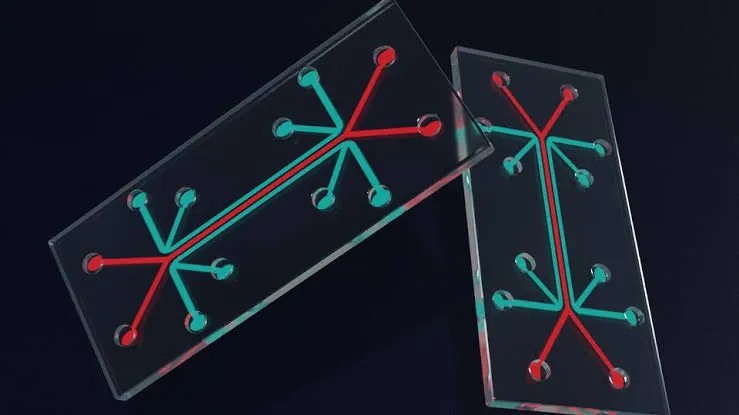
Organ-on-chip devices are small, transparent chips that house living human cells in a microenvironment that simulates the architecture and function of human organs. These chips can replicate the physiological responses of tissues and organs, providing a more accurate model for studying biological processes than traditional cell cultures or animal models.
Credit : ( Manufacturer ) Organ-on-chip
2. Why Use Organ-on-Chip in Space?
Space presents a unique set of challenges for human health, including microgravity, increased radiation exposure, and isolation. Organ-on-chip technology allows scientists to study these effects in a controlled manner, providing insights that are critical for the safety and well-being of astronauts on long-duration missions.
3. Key Applications in Space Research
3.1. Microgravity Studies:
Microgravity affects cellular and tissue functions in ways that are not fully understood. Organ-on-chip devices can simulate the effects of microgravity on various human tissues, such as heart, lung, and muscle, helping researchers understand how these changes might impact astronaut health.1
3.1.1.Example:
Heart tissue chips have been used to investigate changes in cardiac function due to microgravity. These studies have shown that microgravity can alter the way heart cells contract and communicate, which could have implications for astronaut health on long missions.2
3.2. Radiation Exposure:
Space missions expose astronauts to higher levels of cosmic radiation, which can damage cells and tissues. Organ-on-chip systems can model the effects of this radiation on human tissues, aiding in the development of protective measures and treatments.3
3.2.1.Example:
Researchers have used organ-on-chip devices to study the effects of cosmic radiation on human skin cells. These studies help in developing strategies to protect astronauts from the harmful effects of radiation during long-term space missions.
3.3. Muscle and Bone Health:
Prolonged exposure to microgravity leads to muscle atrophy and bone density loss. Muscle-on-chip and bone-on-chip devices are used to study these effects and test potential countermeasures, such as drugs that promote muscle regeneration and bone health.1
3.3.1.Example:
Muscle-on-chip devices have been used to test drugs that could prevent muscle wasting in astronauts. These studies are crucial for maintaining astronaut health during extended missions to Mars and beyond.
3.4. Disease Modeling and Drug Testing:
The space environment can accelerate the progression of certain diseases. Organ-on-chip devices can model these diseases more accurately in microgravity, allowing for the testing of new drugs and treatments in a space-relevant context.3
3.4.1.Example:
Organ-on-chip technology has been used to model lung diseases in microgravity, providing insights into how these conditions might progress differently in space and how they can be treated effectively.
4. Real-World Examples
4.1. NASA’s Tissue Chips in Space Program:
This initiative aims to use tissue chips to study the effects of spaceflight on human health. Experiments have included heart, lung, and muscle tissues to understand how they respond to the space environment. For instance, heart tissue chips have been used to investigate changes in cardiac function due to microgravity.1
4.2. Emulate’s Human Emulation System:
Emulate has partnered with NASA to send their organ-on-chip technology to the International Space Station (ISS). These experiments focus on understanding how space conditions affect human cells and tissues, providing valuable data for future space missions.4
4.3. Advanced Space Research:
Researchers are using organ-on-chip devices to study the effects of cosmic radiation on human tissues. These studies help in developing strategies to protect astronauts from the harmful effects of radiation during long-term space missions.
5. Future Prospects
The potential of organ-on-chip technology in space research is vast. As we prepare for missions to Mars and beyond, understanding how the human body adapts to space will be crucial. Organ-on-chip devices will play a key role in this research, helping to ensure the health and safety of astronauts on these pioneering journeys.
6. Conclusion
Organ-on-chip technology is a powerful tool in the quest to understand human biology in space. By simulating the conditions of space travel, these devices provide invaluable insights into how our bodies respond to the challenges of microgravity, radiation, and isolation. As we continue to explore the final frontier, organ-on-chip technology will be at the forefront of ensuring that our journeys are safe and successful.
Hope you like this blog folks . If any suggestions let know in the comments below and be free to discuss on this topic. Comments are appreciated .If anyone one want to add something new or share their knowledge or add on to this topic can ping below in the comments session…..A chip in space……Also do watch my youtube reels shared above on Organ-on-chip 😀
If you could live anywhere in the world, where would it be?
Exploring Creativity in Science
Rittu Sara Raju
Who don’t like to live in their home town or in a place where you were born or where you were brought up right for a long run after certain age….. we all go for work or study outside for living at your young age…..but everyone will love to be in their home place at old age if I am not wrong….
Yaa….but then if it is outside my country i would like to live in any place in the world where there is peace, love and harmony, healthy environment and greenery. I don’t like to live with toxic cultures. I guess everyone’s view is the same. Yaa but we can or one can change that culture also right….after all we all are humans……
Like just imagine in any part of the world you and imagine if you are not happy what’s the use of it….but do you know?? Happiness isn’t tied to location alone; it’s about community and connection. History shows that a single person or a community can sometimes bring about change in society. Building connections, both with the young and the old, is enriching. I consider myself a bit of an “intro-extrovert”—whether I’m open or reserved depends on my mood and the people around me. 😁….Other interactions is Social media world the platforms like WordPress allow us to connect with people around the world and share experiences. It’s amazing to learn from others, regardless of age or background. Whether it’s a long blog post or a single sentence, every shared experience offers a unique perspective. Heee😁 It was just my view….Sorry if I framed this paragraph wrong…..because we all come under this category somewhere or other if talking about cultures but mingling up with various cultures teaches us many things by taking into account without distracting your faith 😀
Ok so basically in general i like all part of the world if someone book an give me a free flight ticket to travel the whole world😅😂…..Just joking….
We all should love each other as brothers and sisters…..
I hope you enjoyed this little prompt and blog post! Feel free to share your thoughts in the comments. 😊❤️
Have a nice day❤️
Regards,
Rittu Sara Raju✨️❤️
2–3 minutes
Daily writing prompt
If you could live anywhere in the world, where would it be?
Name the most expensive personal item you’ve ever purchased (not your home or car).
Exploring Creativity in Science
Rittu Sara Raju
Today the prompt asked was expensive personal thing now if the question mentions personal then it will be personal right but ya the prompt could have been framed – what was the most expensive item you’ve have ever buyed? Yaa anyways I am not questioning the person who framed the prompt it was just my suggestions, ya some may be ok with sharing their experiences😅😁…because many personal things comes under it right….
Ok I will share things I have purchased not personal one here😅😁 yaa a person who have seen world lot can share a lot about it and very much shopping or wealthy enough to….because I am just a kid who is just getting adapt to this world….so I will be having very much small stuffs while others may having so great….kind of stuffs….here now
I can’t put my study stuffs as luxury item😅 and neither anyone would do because everyone are part of it for higher education unless you get some good funding or scholarship on top tier University in a top tier country, and ya as long as inflation doesn’t go in the country so i guess funding will be best option where everything will be covered, but public schools are also good only tution fee in some countries same quality of education and later you will use it for your future…… a long story😅….sorry I went out of topic😅 Let’s come back….
Expensive goods:
Whatever I buy for shopping😅….List are many which I can’t say so many stuffs I will have to describe, buying expensive but saving money, I think most of them must have got the idea😅😁. I don’t know how its works in different countries.
Then I so buy linen clothes & shirts….& sarees…. I do like that….
Yaa….nothing else I had an habit of buying books during my young age and now also whereever I go😅….
That’s it I don’t buy too much of expensive kind….😅
Ok this was expensive goods….not that one personal one✨️😉
Hope you like this blog. If any suggestions let me know in the comments below 😅….See in the next blog folks!!!
As asked in today’s prompt what’s your favorite website I guess most of them have given similar answer 😁
1. WordPress.com
As since most of them have habit of writing blog so it will be wordpress. I guess wordpress is not only for bloging I guess it is also for online merchantise and business….so i guess everyone here do like it may be to jot your experiences, or knowledge or for business 😅.Also I guess a platform where we can learn a lot…i guess if I am not wrong….
2. Youtube.com
If a vlogger then obviously it can also be a choice too😉. Anyways again a platform to learn lot of things…..
3. Website that provides tools for science learners and researchers.
4. Then ya the great google.com the search engine.
The list will go on then if i say😂😅 so here I will put etc…..
Hope you like the blog if any suggestions let me know in the comments below 😀
Do lazy days make you feel rested or unproductive?
Exploring Creativity in Science
Rittu Sara Raju
“According to me, lazy days can be a mix of productivity and relaxation. Sometimes, they offer the space to get creative or try something new. Personally, I often use lazy days to write, learn, or create something, which feels productive in its own way😁. Even cooking a meal or trying out a new recipe can be considered productive, as you’re learning something new😍. While it’s normal to feel lazy sometimes, that feeling can spark a fresh energy to read, watch videos, go outside, or engage in other activities that refresh the mind.
Lazy days are often misunderstood🤔. They’re not just about doing nothing—they’re a chance to recharge, reset, and maybe even rediscover what sparks your creativity. It’s in those moments of stillness that new ideas often emerge, whether it’s trying a recipe you’ve never had time for, finishing that book you started, or simply letting your mind wander freely. These slow-paced days can help us step away from the hustle and remind us that productivity doesn’t always mean ticking off a to-do list. Sometimes, it’s about taking time for ourselves and seeing what naturally unfolds.”
Everyone have their view this was mine. Hope you like it. If any suggestions let know in the comments below. Don’t forget to like & share if you found it interesting…✨️❤️
Have a good day😀
“In the calm of lazy days, we often find the spark for tomorrow’s ideas.”
1–2 minutes
Sep 2026
M
T
W
T
F
S
S
1
2
3
4
5
6
7
8
9
10
11
12
13
14
15
16
17
18
19
20
21
22
23
24
25
26
27
28
29
30
Daily writing prompt
Do lazy days make you feel rested or unproductive?
In the realm of academic writing, proper citation is more than a formality—it is the foundation of intellectual honesty. By giving credit to original authors, researchers avoid plagiarism and enhance the credibility of their work. Citations ensure proper attribution, clarity, and the traceability of research sources across global academic communities.
This guide explores the most widely recognized formats—APA, MLA, Harvard, Chicago, IEEE, Vancouver, AMA, and Turabian—providing examples, common mistakes, and practical tips for mastering each in the current scholarly landscape.
Major Citation Styles and Their Purpose
A wide range of citation styles exists, each tailored to specific academic needs. APA and Harvard styles, which follow the author-date format, are widely used in business, psychology, and social sciences because they highlight the recency of information. MLA focuses on author-page citation and is commonly used in humanities for precise textual referencing. Chicago style offers both note-based and author-date systems, making it versatile for history, arts, and business writing. Vancouver and AMA use numeric systems that are efficient for medical and clinical research, while IEEE is commonly used in engineering and technology fields. ACS is specifically designed for chemistry, emphasizing structured formatting and journal abbreviations, whereas CSE supports biological sciences with multiple citation options. Legal systems such as Bluebook and OSCOLA prioritize authority and formal structure in legal documentation.
1. Understanding Citation Essentials
Before exploring specific styles, it is important to understand how digital sources are identified in 2026:
DOI (Digital Object Identifier): A unique alphanumeric string assigned to digital publications, ensuring permanent and stable access. In professional research, DOIs are preferred over URLs because they do not suffer from “link rot.” Current standards require DOIs to be presented as live hyperlinks starting with https://doi.org/.
URL (Uniform Resource Locator): A web address used to locate online resources. URLs should be accurate and functional, especially when a DOI is unavailable.
2. Core Citation Styles by Discipline
✍️ Understanding “et al.” in Citation
In academic writing, the term et al. is used to simplify citations that involve multiple authors. It comes from the Latin phrase et alii, meaning “and others,” and helps avoid long, repetitive author lists in in-text citations. Instead of listing every author, only the first author’s name is written followed by et al., making the text cleaner and more readable.The use of et al. depends on the citation style. In APA (7th edition), it is used for in-text citations when a source has three or more authors, for example (Sharma et al., 2022), while the full list of authors is still included in the reference section. Harvard style follows a similar approach. In MLA, et al. is used for sources with three or more authors in both in-text and reference entries. In numeric styles such as Vancouver and AMA, et al. is mainly used in the reference list when there are many authors, usually after listing the first few.It is important to format it correctly: et al. should be italicized, include a period after “al.”, and never be written incorrectly as “et. al.” Proper usage improves readability and maintains professional academic standards.
APA Style (7th Edition)
Best for: Social Sciences, Psychology, Education, Business.
In-Text Format: (Author, Year) → (Brown, 2021).
Reference: Brown, A. (2021). Mindfulness and stress reduction. Oxford University Press.
2026 Updates: Surnames and initials for up to 20 authors must now be provided in the reference entry before using ellipses. Publisher locations are no longer required.
Harvard Style
Best for: General Humanities & Social Sciences (International).
In-Text Format: (Author Year) → (Taylor 2020). Note that many versions omit the comma between the author and year.
Reference: Taylor, R. (2020) Mindfulness in modern life. Cambridge University Press.
MLA Style (9th Edition)
Best for: Humanities, Literature.
In-Text Format: (Author Page) → (Johnson 123).
Works Cited: Johnson, Emily. Mindfulness in Therapy. Houghton Mifflin, 2020.
Key Feature: Uses a “container system” to handle complex digital sources like streaming media and online archives.
Vancouver Style (ICMJE 2026)
Best for: Medicine, Life Sciences, and Research Writing.
In-Text Format: Numbered (1) or superscript ^1 in order of appearance.
Reference: 1. Brown A. Mindfulness and stress reduction. Oxford University Press; 2021.
👉 2026 Update: The January 2026 update to the ICMJE Recommendations includes a dedicated Section V addressing the transparent disclosure of AI use in publishing .
IEEE Style
Best for: Engineering, Computer Science, IT.
In-Text Format: Numbered in square brackets →.
Reference: A. Brown, Mindfulness and Stress Reduction. Oxford University Press, 2021.
Key Feature: Initials appear before surnames in the reference list (e.g., I. Author), and references are listed in order of appearance.
Chicago Style (18th Edition)
Best for: History, Business, and Fine Arts.
Notes & Bibliography: Uses footnotes and a formal bibliography.
Author-Date: (Smith 2021) similar to APA.
👉 2026 Update: The 18th edition (released late 2024) omits the city of publication for books published since 1900 and discourages the use of “ibid.” in footnotes, preferring shortened citations for clarity .
Reference: 1. Brown A. Oxidative Stress and Health. Oxford University Press; 2021.
Citation in Business Research
In business and management studies, citation often involves grey literature such as market research reports, white papers, and industry analyses. For instance, reports from Mintel are frequently used to support strategic decisions. In such cases, the organization itself is treated as the author, and the citation emphasizes accessibility and recency. This reflects the dynamic nature of business information, where trends and data evolve rapidly and must be continuously updated.
For example, reports from Mintel are commonly cited.
Harvard Example:
Mintel (2025) Health and wellness trends report. Available at: website (Accessed: 28 March 2026).
👉 Here, the company is treated as the author, and recency is critical.
As of 2026, all major style guides have formalized how to attribute AI-generated content. A fundamental rule remains: AI cannot be listed as an author .
Style
Treatment of AI Tool
2026 Citation Model
APA 7th
Software Developer
OpenAI. (2026). ChatGPT (GPT-4o version) [Large language model].
MLA 9th
Source Title/Container
“Prompt text” prompt. ChatGPT, model GPT-4o, OpenAI.
Chicago 18th
Personal Communication
Cited in footnotes; usually excluded from bibliography.
⚠️ 4. Common Pitfalls and Ethics
Style Mixing: Never mix citation styles. Stick to one disciplinary standard throughout the document.
Retraction Health Checks: Between 2024 and 2025, retractions became a systemic crisis . Before submission, use tools like Scite.ai or Zotero to ensure your sources have not been retracted for fraud or methodological errors .
Technical Precision: When reporting scientific outcomes, such as the probability P of a result, use LaTeX for mathematical accuracy:
📚 5. Modern Citation Management Tools
Manually formatting references is a frequent point of failure. These tools streamline the process:
Zotero: Free, open-source, and best for browser integration and retraction alerts .
Mendeley: Ideal for PDF management and social academic networking .
EndNote: The professional standard for large-scale institutional research .
Paperpile: The best choice for seamless Google Docs and Workspace integration . Conclusion Mastering citation styles is essential for producing high-quality academic work. It builds trust between researchers and readers by ensuring transparency, accuracy, and adherence to global academic standards. By combining the appropriate citation style with efficient management tools, researchers can focus on what truly matters—the quality and impact of their science. SEO Optimization
Platforms such as Figshare enable researchers to upload datasets and receive DOIs, making their work citable and globally accessible. These tools streamline the entire research workflow from collection to publication.
🎯 Final Thought
No matter the field, citation remains a core element of trustworthy research. Accurate citation does not just support your work—it defines its credibility.
✨ Conclusion
Mastering citation is not about memorizing formats but about understanding how knowledge flows across disciplines. By combining correct citation styles with modern tools and practices, researchers can produce work that is both credible and impactful. In today’s academic world, effective citation is not optional—it is essential.
⚡ Quick Cheat-Sheet: “et al.”
Meaning → “and others” Use → When multiple authors are present APA → 3+ authors → (Author et al., Year) Harvard → Same as APA MLA → 3+ authors → Author et al. Vancouver/AMA → Used in reference list for many authors Rule → Italicize et al. and use a period after “al.”
For me if the question is about your favorite artists, then the answer will be God. We can actually feel and see the creation of God how wonderful & mesmerizing it is the stars, planets, creatures, birds, trees, plants and we ourselves are part of God’s creation how amazing it is right …..
Then the other thing is that we ourselves are artist in someway around, which again is gifted by God….which again is an art….so are’nt we artists again??😃
I just shared my view here, everyone has their views on this point & have favorite artists as well. This was just my short view point 😁. Well , Hope u like it. If any suggestions let me know in the comments below….👇😁❤️
Regards,
Rittu Sara Raju😀
“The heavens declare the glory of God; the skies proclaim the work of his hands.”🙏🙏
Same question is asked in today’s prompt which has been asked a month back, the only change seen is sentences are framed in other way around 😅
I have already mentioned about types of foods in my previous blog post. Any new readers here then no worries…..I will share the link to reach direct towards the site…because it will be a bit long and lengthy for me to write here, you’ll can refer this link if any one of them is not lazy enough to just click the link don’t worry anyways its not a spam link its a link to directly reach to my post don’t be too much skeptical about clicking the link😁anyways not at all mandatory. If any blog reading folks here around or reading enthusiasts can really do so, then lazy I mentioned above i guess we every one are in someway other….
Haa🤣 just a joke anyways link has been shared , you folks can check below👇






 Lifestyle Science & health
Thanks never forget God during your highs or lows in life. God bless you🙏