
Posted in Science & Tech , Education

Epigenetic changes can cause Type 2 Diabetes

Audio version of article:

Source:

Lund University

Summary:

Do epigenetic changes cause type 2 diabetes, or do the changes occur only after a person has become ill? A new study provides increased support for the idea that epigenetic changes can cause type 2 diabetes.


What is epigenetics?
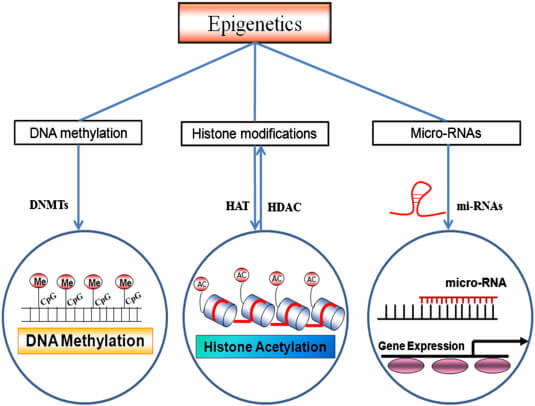
Epigenetics Mechanism

Epigenetics is like the conductor of a genetic orchestra 🎻, influencing which genes are played (expressed) and when, without changing the musical notes (DNA sequence) themselves 🎶. It’s like a molecular maestro orchestrating gene expression in response to environmental cues 🌱, lifestyle choices 🏃‍♂️, and developmental stages 🧬. Epigenetic modifications, such as DNA methylation, histone modifications, and non-coding RNA regulation, act like tiny molecular switches 🧬, turning genes on and off as needed, all without altering the fundamental DNA sequence!

Epigenetics and Type 2 Diabetes.

Type 2 Diabetes

Discovery of Epigenetic Changes:

Researchers at Lund University have discovered that certain changes in how our genes work, called epigenetic changes, might actually cause type 2 diabetes, rather than just happening after someone already has the condition (Rönn et al., 2023).

Implications for Disease Prevention:

This finding suggests that understanding these changes could help us develop better ways to prevent the disease.

Role of Environment and Lifestyle:

While our genes themselves don’t usually change, things like our environment and lifestyle can cause these epigenetic changes, which can affect how our genes function. 🧬

Association with High Blood Sugar Levels:

The team found specific changes in the DNA of people with type 2 diabetes compared to those without it. Interestingly, they also found similar changes in people with high blood sugar levels, suggesting that these epigenetic changes might be involved in the development of the disease.

Identification of Important Genes:

RHOT1 genes

RHOT1, also known as Rho-related BTB domain-containing protein 1, is a gene that encodes a protein involved in cellular processes such as mitochondrial dynamics, apoptosis, and cell proliferation. It belongs to the Rho family of small GTPases and plays a role in regulating mitochondrial fusion and fission

Certain genes, such as RHOT1 ( Fig. BTB domain 1) , showed these epigenetic changes in people with diabetes and played a role in how insulin is produced.

Potential for Predictive Biomarkers:

Biomarkers

What are Biomarkers?

Biomarkers are measurable indicators, such as molecules or genes, providing information about biological processes, conditions, or treatment responses, aiding in medical research, diagnosis, and disease monitoring.

Examples of Biomarkers:

Blood Glucose Levels:

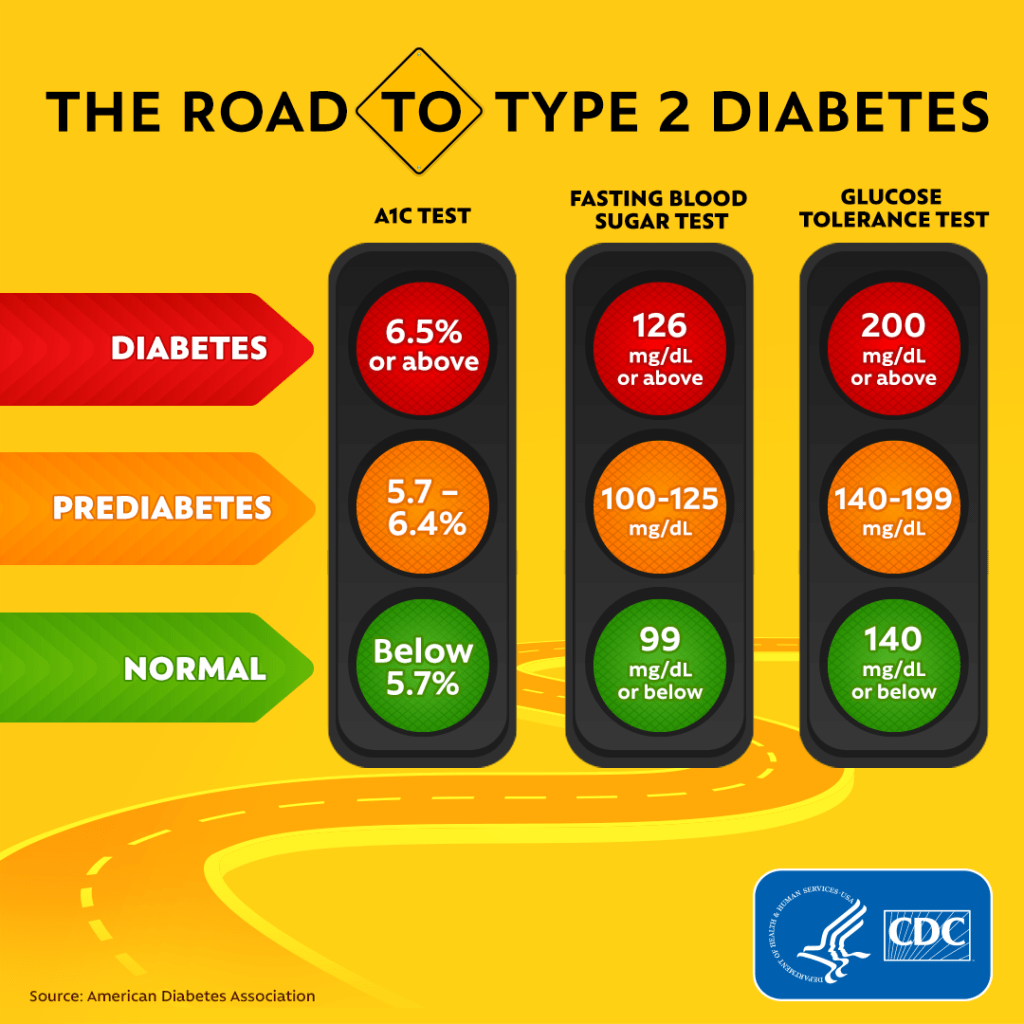
Glucose is a biomarker for diabetes. High levels might indicate diabetes or insulin resistance.

The researchers hope to develop a way to predict who might be at risk for developing type 2 diabetes based on their epigenetic changes. This could allow for personalized lifestyle advice or new treatments aimed at correcting these gene activities.

Ultimate Goal of Disease Prevention:

Ultimately, the goal is to help prevent type 2 diabetes by understanding and targeting these epigenetic changes. 💡These highlighted points summarize the key findings and implications of the study.

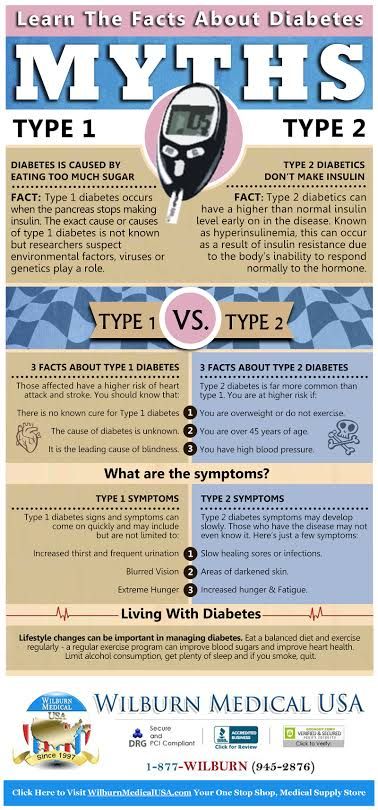
Some Tips and Facts on Diabetes 2:
Hope you find this blog informative!😃 Please like and share it with your friends and family. Don’t forget to subscribe to our blog and follow our social media channels for more interesting topics. 🧿

Journal Reference:

Tina Rönn, Jones K. Ofori, Alexander Perfilyev, Alexander Hamilton, Karolina Pircs, Fabian Eichelmann, Sonia Garcia-Calzon, Alexandros Karagiannopoulos, Hans Stenlund, Anna Wendt, Petr Volkov, Matthias B. Schulze, Hindrik Mulder, Lena Eliasson, Sabrina Ruhrmann, Karl Bacos, Charlotte Ling. Genes with epigenetic alterations in human pancreatic islets impact mitochondrial function, insulin secretion, and type 2 diabetes. Nature Communications, 2023; 14 (1) DOI: 10.1038/s41467-023-43719-9

Reference Site:

https://www.sciencedaily.com/releases/2023/12/231213112605.htm
3–4 minutes

Get our latest posts in your inbox.

Daily writing prompt
What activities do you lose yourself in?
Posted in Science & Tech , Education

Change in gene code may explain how human ancestors lost tails. Mechanism behind change may reveal new role for parts of the genetic code.


Hey there! Ever wondered why humans don’t have tails like monkeys? Well, researchers at NYU Grossman School of Medicine may have figured it out! They found that a genetic change in our ancient ancestors might be the reason behind it. This discovery, published as the cover story in the journal Nature, compared the DNA of tail-less apes and humans with that of tailed monkeys. They discovered a DNA insertion shared by apes and humans but missing in monkeys.

To dive deeper into this, the research team engineered mice to see how this insertion, found in a gene called TBXT, affected their tails. Surprisingly, they found a variety of tail effects, even some mice born without tails! Dr. Bo Xia, one of the study authors, expressed excitement about unraveling this evolutionary mystery that has intrigued him since childhood.


Previous research had linked over 100 genes to tail development in various vertebrates, leading the authors to hypothesize that changes in these genes’ DNA code played a role in tail loss. However, they were astonished to find that the differences in tails didn’t stem from mutations in TBXT, but rather from the insertion of a DNA snippet called AluY into the gene’s regulatory code in the ancestors of apes and humans.

This discovery sheds light on how genetic instructions are converted into proteins and how alternative splicing can influence traits like tail length. Despite not directly altering the protein-coding sequence, this insertion influenced alternative splicing, resulting in various tail lengths.

The researchers speculate that this genetic change, which occurred about 25 million years ago, might have provided an advantage for life on the ground compared to trees. However, it’s also associated with a small increase in neural tube defects in mice, hinting at a possible evolutionary trade-off.

In addition to providing insights into our evolutionary history, this study showcases the intricate complexity of the human genome and the role of “jumping genes” in shaping our traits. It’s a fascinating glimpse into how tiny genetic changes can have profound effects on species over millions of years.

The study, led by Drs. Bo Xia, Jef D. Boeke, and Itai Yanai, involved a collaborative effort from several researchers at NYU Langone Health and was supported by various grants and funding sources.


Journal Reference:


Bo Xia, Weimin Zhang, Guisheng Zhao, Xinru Zhang, Jiangshan Bai, Ran Brosh, Aleksandra Wudzinska, Emily Huang, Hannah Ashe, Gwen Ellis, Maayan Pour, Yu Zhao, Camila Coelho, Yinan Zhu, Alexander Miller, Jeremy S. Dasen, Matthew T. Maurano, Sang Y. Kim, Jef D. Boeke, Itai Yanai. On the genetic basis of tail-loss evolution in humans and apes. Nature, 2024; 626 (8001): 1042 DOI: 10.1038/s41586-024-07095-8

Reference Site:

Science daily News Article.

2–3 minutes
Posted in Science & Tech , Education

Check out some of the most amazing facts and discoveries that have been made in science. You will be amazed by how much you don’t know about our world!!!!!

Science is both magical and practical. It allows you to understand what’s happening in your own body or even the entire universe. 🙂

We all love to learn new things! Please take a look at some collection of the most fascinating facts about the world around us.

Here are some interesting facts about science that you may not have known or would like to learn more about. These quick tidbits of information will be a great refresher for anyone interested in learning more about the fascinating world of science!

“Science means constantly walking a tightrope between blind faith and curiosity; between expertise and creativity; between bias and openness; between experience and epiphany; between ambition and passion; and between arrogance and conviction – in short, between an old today and a new tomorrow.”

– Henrich Rohrer

1.Did you know that bacteria🧫 are responsible for 25% of our body weight? Did you also know that over half of all living things on earth are bacteria? Scientists have discovered a bacterium called Proteus–which looks like a long root–living in reservoirs underneath glaciers, when it was first discovered it has been called the “longest-living organism” on earth; it is estimated to be about 3.4 billion years old!

2.There are more than 1,000 species of bacteria to be found on earth.

3.Each person has around 100 trillion bacteria in their digestive system

4.The first animal to be discovered by a paleontologist was a turtle 🐢 called Eunotosaurus, which lived in the Cretaceous period (about 145 million years ago).

5.The first mammal to be described by a scientist was Amblyomma americanum, which lived in North America during the late Pleistocene period (about 1 million years ago).

Devonian period Shark

6.The first fish to be discovered by a paleontologist was a shark 🐋 named Teeth, which lived in the Devonian period (about 480 million years ago).


7.The name “Einstein” was originally pronounced as “ay-zin”, but the German pronunciation had to be changed for people outside of Germany.

8.The Earth is not a perfect sphere, but an oblate spheroid.

9.The gravitational pull of the moon is responsible for ocean tides on Earth.

10.There are more atoms in a single glass of water than glasses of water in all the oceans of the world combined.

11. Humans have 46 chromosomes while chickens have 78 and bees have only 16.

12. Diamonds are made up of nothing but pure carbon – the same element that makes up the lead in your pencil!

13. A human’s small intestine is about 22 feet long, but it can fit inside a shoe box when stretched out straight!

14. A lightning bolt⚡️ can reach temperatures five times hotter than those found on the surface of the sun! 🌞

15.Trees🏝 remove about 20 million tons of dust from the atmosphere every year!

16. Every year, the amount of solar energy that hits the Earth🌏 is greater than the total amount of energy consumed by humans in one year.

17. The Milky Way galaxy has over 200 billion stars, ⭐️and our Sun is just one of them.

18. The average human adult consists of 7,000,000,000,000,000,000,000,000 (7 octillion) atoms.

19.All living things on Earth share a common ancestor that lived 3.5 billion years ago.

20.Most of the oxygen in Earth’s atmosphere comes from tiny ocean plants known as phytoplankton. 🦠🦠

21.Light takes 8 minutes and 20 seconds to travel from the Sun to Earth—that’s why we see sunlight 8 minutes after it’s made!😲


22. The Earth’s core is as hot as the surface of the sun.

23. The average human body contains around 0.2 milligrams of gold.😲

24. A single strand of human DNA🧬 is about two meters long if stretched out.

25. There are more than 1,000 billion stars in our Milky Way galaxy alone.

26. 90% of the Earth’s ice🧊 is located in Antarctica, and over 80% of that is found in East Antarctica alone.

27. A lightning bolt can reach temperatures up to 30,000°C (54,000°F) – five times hotter than the sun’s surface temperature!

28. Every day, the Sun converts 600 million tons of its mass into energy – a process known as nuclear fusion.

29. Watermelons🍉 are actually considered to be both fruits and vegetables, because they contain seeds from a flowering plant and are eaten like a vegetable but have many attributes of a fruit, such as sweetness and color.

30 .The space between stars isn’t empty; it’s filled with gas and dust particles which we call “interstellar medium”.

31. The average human body contains enough carbon to produce over 9,000 pencils.

32. The hottest temperature ever recorded on Earth was 134°F (57°C) in Death Valley, California in 1913.

33. Mars has the largest dust storms in the solar system which can last for months and cover the entire planet.

34. The distance between Earth and Moon is 238,855 miles (384,400 km).

35. A rainbow 🌈 is actually a full circle but we see only an arc due to the horizon being in the way of our view of it.

36. Scientists have estimated that there may be over 8 million species on Earth that haven’t been discovered yet.

37. Light travels at 186,282 miles per second (299,792 kilometers per second).

38. The human brain can read up to 1,000 words per minute but can comprehend only about 40 words per minute when reading for understanding.

39. It takes around 8 minutes for sunlight to reach from the Sun to Earth’s surface.

40. If a star is more than 1 million times bigger than our Sun then it’s considered a supergiant star.

Amazing Facts & Discoveries made in the field of Science

I hope you learned 🤔 something new from this blog. Share your views and don’t forget to share it with your friends and family. 😃

4–6 minutes
Daily writing prompt
What movies or TV series have you watched more than 5 times?
Posted in Science & Tech , Education

Incredible Science Facts That Will Change Your Perspective 

Science is constantly discovering new and incredible things about our universe. Every day, we are discovering more about the world we live in and the cosmos that surrounds us. Some of these discoveries are absolutely mind-blowing, and they have the potential to change the way we see the world.

For every fact there is an infinity of hypotheses.

Robert M. Pirsig

Asking questions is the first step to gaining knowledge. It starts with curiosity, which leads to investigation and eventually understanding. We often take for granted the incredible scientific discoveries that have been made over the centuries.

Did you know that the average human body temperature is 37°C? Or that the longest recorded human lifespan was 122 years? 🤔


Did you know that the average person produces enough saliva in their lifetime to fill two swimming pools? Or that the human brain is more active at night than during the day? 🤔😎

In this article, we will explore some mind-blowing science facts that will change your perspective. These facts are a testament to the power of human curiosity and the potential for us to continue learning and expanding our understanding of the world we live in. So without further ado, let’s dive in! 😃

1. The average person produces enough saliva in their lifetime to fill two swimming pools. 🏊🚣🏄

2. The human brain is more active at night🌙 than during the day.

3. The Sun is an average star. There are billions of stars in the Universe that are much bigger and much brighter than our Sun.🌞

4. The Universe is expanding. Every day, the Universe gets a little bit bigger.

5. We are made of stardust⭐. Every atom in our bodies was once part of a star.

6. The speed of light is the fastest speed possible.

7. Time slows down as you approach the speed of light.

8. Matter and energy are the same thing.

9. E=mc2 is one of the most famous equations in science.

10. The universe is estimated to be around 13.8 billion years old.

11. The average lifespan of a star is 10 billion years.

12. There are more stars in the universe than there are grains of sand on all the beaches on Earth. 🏖🌏

13. The Milky Way galaxy is thought to contain 100-400 billion stars.

14. The average lifespan of a red blood cell is only 120 days.

15. The human body contains enough iron to make a 3-inch nail. 💅

16. The largest known spiral galaxy is IC 1101. It is over 100 times the size of our Milky Way galaxy.

17. Our Solar System is tiny. There are billions of stars in our galaxy alone.

18. The nearest star to our Sun is Proxima Centauri. It is 4.2 light years away. 🔭

19. The furthest thing we can see with our naked eyes is the Andromeda Galaxy 💫💫. It is 2.5 million light years away.

20. The average human adult has enough DNA🧬 in their body to stretch from the Sun to Pluto and back — about 9.3 billion miles (15 billion kilometers).

21. Every day, the Sun loses 360 million tonnes of material.

22. If you took all the blood vessels in your body and laid them end to end, they would stretch for 100,000 miles (160,000 kilometers).

23. The human skeleton is made up of 206 bones.

24. There are more than 60,000 miles (96,560 kilometers) of nerves in the human body.

25. The human body has about 37.2 trillion cells.

26. Blood is about 83% water.

27. The human heart pumps about 2,000 gallons (7,570 liters) of blood each day.

28. The average adult human breathes about 7,500 liters of air each day.

29. The human lungs have a surface area of about 70 square meters.

30. The average human adult has about 20 square meters of skin.

31. The average human adult has about 100,000 kilometers of blood vessels.

32. The average human adult has about 2.5 million sweat glands.

33. The average human adult has about 100,000 hairs on their head.

It is amazing what scientists have discovered about our universe in such a short amount of time😄😄. These facts presented in this article are a small sample of the incredible discoveries that have been made. Each one of these facts has the potential to change the way we see the world. If you found this article interesting, be sure to like, share, follow, and comment.

3–4 minutes

Contact

E-mail Address:

ritzsara98@gmail.com

A WordPress.com website

Daily writing prompt
What movies or TV series have you watched more than 5 times?