I can cook any kind of food or can just give a try if I get recepie book or idea….i am more into Indian food. I can also cook western food as well, recepie is the key player here…..😅 Obviously without recepie how will you cook certain kind of food unless its your own invention or magic into the new food invented ….. Yaa 😀 but I cook🍲👩🍳 certain kind of meats but not all…..😅
I have written a blog post on food in my previous prompt if you are interested can take a look into it. I have attached the link below
Do lazy days make you feel rested or unproductive?
Exploring Creativity in Science
Rittu Sara Raju
“According to me, lazy days can be a mix of productivity and relaxation. Sometimes, they offer the space to get creative or try something new. Personally, I often use lazy days to write, learn, or create something, which feels productive in its own way😁. Even cooking a meal or trying out a new recipe can be considered productive, as you’re learning something new😍. While it’s normal to feel lazy sometimes, that feeling can spark a fresh energy to read, watch videos, go outside, or engage in other activities that refresh the mind.
Lazy days are often misunderstood🤔. They’re not just about doing nothing—they’re a chance to recharge, reset, and maybe even rediscover what sparks your creativity. It’s in those moments of stillness that new ideas often emerge, whether it’s trying a recipe you’ve never had time for, finishing that book you started, or simply letting your mind wander freely. These slow-paced days can help us step away from the hustle and remind us that productivity doesn’t always mean ticking off a to-do list. Sometimes, it’s about taking time for ourselves and seeing what naturally unfolds.”
Everyone have their view this was mine. Hope you like it. If any suggestions let know in the comments below. Don’t forget to like & share if you found it interesting…✨️❤️
Have a good day😀
“In the calm of lazy days, we often find the spark for tomorrow’s ideas.”
1–2 minutes
Sep 2026
M
T
W
T
F
S
S
1
2
3
4
5
6
7
8
9
10
11
12
13
14
15
16
17
18
19
20
21
22
23
24
25
26
27
28
29
30
Daily writing prompt
Do lazy days make you feel rested or unproductive?
In the realm of academic writing, proper citation is more than a formality—it is the foundation of intellectual honesty. By giving credit to original authors, researchers avoid plagiarism and enhance the credibility of their work. Citations ensure proper attribution, clarity, and the traceability of research sources across global academic communities.
This guide explores the most widely recognized formats—APA, MLA, Harvard, Chicago, IEEE, Vancouver, AMA, and Turabian—providing examples, common mistakes, and practical tips for mastering each in the current scholarly landscape.
Major Citation Styles and Their Purpose
A wide range of citation styles exists, each tailored to specific academic needs. APA and Harvard styles, which follow the author-date format, are widely used in business, psychology, and social sciences because they highlight the recency of information. MLA focuses on author-page citation and is commonly used in humanities for precise textual referencing. Chicago style offers both note-based and author-date systems, making it versatile for history, arts, and business writing. Vancouver and AMA use numeric systems that are efficient for medical and clinical research, while IEEE is commonly used in engineering and technology fields. ACS is specifically designed for chemistry, emphasizing structured formatting and journal abbreviations, whereas CSE supports biological sciences with multiple citation options. Legal systems such as Bluebook and OSCOLA prioritize authority and formal structure in legal documentation.
1. Understanding Citation Essentials
Before exploring specific styles, it is important to understand how digital sources are identified in 2026:
DOI (Digital Object Identifier): A unique alphanumeric string assigned to digital publications, ensuring permanent and stable access. In professional research, DOIs are preferred over URLs because they do not suffer from “link rot.” Current standards require DOIs to be presented as live hyperlinks starting with https://doi.org/.
URL (Uniform Resource Locator): A web address used to locate online resources. URLs should be accurate and functional, especially when a DOI is unavailable.
2. Core Citation Styles by Discipline
✍️ Understanding “et al.” in Citation
In academic writing, the term et al. is used to simplify citations that involve multiple authors. It comes from the Latin phrase et alii, meaning “and others,” and helps avoid long, repetitive author lists in in-text citations. Instead of listing every author, only the first author’s name is written followed by et al., making the text cleaner and more readable.The use of et al. depends on the citation style. In APA (7th edition), it is used for in-text citations when a source has three or more authors, for example (Sharma et al., 2022), while the full list of authors is still included in the reference section. Harvard style follows a similar approach. In MLA, et al. is used for sources with three or more authors in both in-text and reference entries. In numeric styles such as Vancouver and AMA, et al. is mainly used in the reference list when there are many authors, usually after listing the first few.It is important to format it correctly: et al. should be italicized, include a period after “al.”, and never be written incorrectly as “et. al.” Proper usage improves readability and maintains professional academic standards.
APA Style (7th Edition)
Best for: Social Sciences, Psychology, Education, Business.
In-Text Format: (Author, Year) → (Brown, 2021).
Reference: Brown, A. (2021). Mindfulness and stress reduction. Oxford University Press.
2026 Updates: Surnames and initials for up to 20 authors must now be provided in the reference entry before using ellipses. Publisher locations are no longer required.
Harvard Style
Best for: General Humanities & Social Sciences (International).
In-Text Format: (Author Year) → (Taylor 2020). Note that many versions omit the comma between the author and year.
Reference: Taylor, R. (2020) Mindfulness in modern life. Cambridge University Press.
MLA Style (9th Edition)
Best for: Humanities, Literature.
In-Text Format: (Author Page) → (Johnson 123).
Works Cited: Johnson, Emily. Mindfulness in Therapy. Houghton Mifflin, 2020.
Key Feature: Uses a “container system” to handle complex digital sources like streaming media and online archives.
Vancouver Style (ICMJE 2026)
Best for: Medicine, Life Sciences, and Research Writing.
In-Text Format: Numbered (1) or superscript ^1 in order of appearance.
Reference: 1. Brown A. Mindfulness and stress reduction. Oxford University Press; 2021.
👉 2026 Update: The January 2026 update to the ICMJE Recommendations includes a dedicated Section V addressing the transparent disclosure of AI use in publishing .
IEEE Style
Best for: Engineering, Computer Science, IT.
In-Text Format: Numbered in square brackets →.
Reference: A. Brown, Mindfulness and Stress Reduction. Oxford University Press, 2021.
Key Feature: Initials appear before surnames in the reference list (e.g., I. Author), and references are listed in order of appearance.
Chicago Style (18th Edition)
Best for: History, Business, and Fine Arts.
Notes & Bibliography: Uses footnotes and a formal bibliography.
Author-Date: (Smith 2021) similar to APA.
👉 2026 Update: The 18th edition (released late 2024) omits the city of publication for books published since 1900 and discourages the use of “ibid.” in footnotes, preferring shortened citations for clarity .
Reference: 1. Brown A. Oxidative Stress and Health. Oxford University Press; 2021.
Citation in Business Research
In business and management studies, citation often involves grey literature such as market research reports, white papers, and industry analyses. For instance, reports from Mintel are frequently used to support strategic decisions. In such cases, the organization itself is treated as the author, and the citation emphasizes accessibility and recency. This reflects the dynamic nature of business information, where trends and data evolve rapidly and must be continuously updated.
For example, reports from Mintel are commonly cited.
Harvard Example:
Mintel (2025) Health and wellness trends report. Available at: website (Accessed: 28 March 2026).
👉 Here, the company is treated as the author, and recency is critical.
As of 2026, all major style guides have formalized how to attribute AI-generated content. A fundamental rule remains: AI cannot be listed as an author .
Style
Treatment of AI Tool
2026 Citation Model
APA 7th
Software Developer
OpenAI. (2026). ChatGPT (GPT-4o version) [Large language model].
MLA 9th
Source Title/Container
“Prompt text” prompt. ChatGPT, model GPT-4o, OpenAI.
Chicago 18th
Personal Communication
Cited in footnotes; usually excluded from bibliography.
⚠️ 4. Common Pitfalls and Ethics
Style Mixing: Never mix citation styles. Stick to one disciplinary standard throughout the document.
Retraction Health Checks: Between 2024 and 2025, retractions became a systemic crisis . Before submission, use tools like Scite.ai or Zotero to ensure your sources have not been retracted for fraud or methodological errors .
Technical Precision: When reporting scientific outcomes, such as the probability P of a result, use LaTeX for mathematical accuracy:
📚 5. Modern Citation Management Tools
Manually formatting references is a frequent point of failure. These tools streamline the process:
Zotero: Free, open-source, and best for browser integration and retraction alerts .
Mendeley: Ideal for PDF management and social academic networking .
EndNote: The professional standard for large-scale institutional research .
Paperpile: The best choice for seamless Google Docs and Workspace integration . Conclusion Mastering citation styles is essential for producing high-quality academic work. It builds trust between researchers and readers by ensuring transparency, accuracy, and adherence to global academic standards. By combining the appropriate citation style with efficient management tools, researchers can focus on what truly matters—the quality and impact of their science. SEO Optimization
Platforms such as Figshare enable researchers to upload datasets and receive DOIs, making their work citable and globally accessible. These tools streamline the entire research workflow from collection to publication.
🎯 Final Thought
No matter the field, citation remains a core element of trustworthy research. Accurate citation does not just support your work—it defines its credibility.
✨ Conclusion
Mastering citation is not about memorizing formats but about understanding how knowledge flows across disciplines. By combining correct citation styles with modern tools and practices, researchers can produce work that is both credible and impactful. In today’s academic world, effective citation is not optional—it is essential.
⚡ Quick Cheat-Sheet: “et al.”
Meaning → “and others” Use → When multiple authors are present APA → 3+ authors → (Author et al., Year) Harvard → Same as APA MLA → 3+ authors → Author et al. Vancouver/AMA → Used in reference list for many authors Rule → Italicize et al. and use a period after “al.”
For me if the question is about your favorite artists, then the answer will be God. We can actually feel and see the creation of God how wonderful & mesmerizing it is the stars, planets, creatures, birds, trees, plants and we ourselves are part of God’s creation how amazing it is right …..
Then the other thing is that we ourselves are artist in someway around, which again is gifted by God….which again is an art….so are’nt we artists again??😃
I just shared my view here, everyone has their views on this point & have favorite artists as well. This was just my short view point 😁. Well , Hope u like it. If any suggestions let me know in the comments below….👇😁❤️
Regards,
Rittu Sara Raju😀
“The heavens declare the glory of God; the skies proclaim the work of his hands.”🙏🙏
What was the last thing you searched for online? Why were you looking for it?
The last thing I searched online was how to do settings for youtube because if settings are not done in the way it should be it can also effect the video quality and views as per what I have observed, read & listened from many other people. Because youtube algorithms matters here 😁 like we read and memorizes same techniques goes here youtube should be able to read it….
Also as well some goes to copyright if a topic taken from movies or series. I took one, now i can’t figure out🤔, is it because of some words used or name of series used or scenes explained ??? don’t know my views suddenly went down 😅 because i used to make educational content wherin i used a series example was that the views eater of my video 😅….still skeptical about it, about tags and monetization because I was figuring out where I went wrong in uploading my vlog & the niche.
Because age groups matters like I observed in my analytics it was from 18 to above & which country & which timing best….i guess all this things matters….now since it’s educational information so have to figure out more deep into the settings & which kind of videos are more trending that viewers need…..😅.
These were the things I searched last….Yaa here SEO & SEM also works…..at a level…
Basically I was learning 😅🤣
Well what do you’ll think guys any influencers here let me know your suggestions below in comments it would be greaty appreciated since i am new into it .
5. Connecting or trying to know people…how much I could connect it actually depends how much that person is interested or dedicated to have healthy communication or communicate or want to know things through me or my blogs or vlogs if they watch. I try my maximum to share my knowledge which I get through sources to share….so always welcome😀😅
6. Some goals or about your life is although said it has to be kept secret as well no need to reveal to everyone 😅…because it should not hit you back by revealing….i guess we all do…
7. Then life is learning process so lets pray to God that we end up or go through right path…..Let’s hope for good ..
And goals goes on changing everytime just as child says in their childhood that I will become that then after some time I will become this…..so on…. we all are like this so by this we can relate….. everythime new things comes in market we feel or crave to learn or buy that particular things just in similar way goals goes….so goals is a never ending 😀 For some people it takes time to reach goal while some achieve fast…..but that’s not end of the world….half of the world face it….but it’s said slow & study wins the race….Actually I just shared my view now everyone has theirs….😅
Just take an example of writing something or starting a new blog… first you will find topic, then write content, then align & soo much procedure like step by step same goes here…sometimes error happens but we rectify it right & end up making a perfect blog….so….yes that’s goal….you wanted to prepare blog & you did it
Hope you found it fascinating. If have any suggestions let me know in the comments below 😀
What is the most important thing to carry with you all the time?
Source: AI generated image created using Microsoft Capilot
As per the question asked, the most important thing I will carry along with me will be water while traveling, my phone, electronic devices, books, pen & other essential things needed. If girls or women’s one can relate.😀
If its mens i won’t be able to figure out. As per my wild guess it might be water , any electronic devices, watches, tissues etc… depends on an individual 😅😂.
As my siblings are sisters , so i have no idea about mens 😅…..Anyways the topic wasn’t here🤣 i went way too far😅 Well!!…the question was what to carry all time??….According to me common important thing for both men and women to carry along with them would be water, wallets, mobile, IDs, pens & other remaining items would be left for that person😅, because I don’t know what all will be needed other than the above listed important item…
List if asked for a while it might be many….some which I can’t list here as it’s a long list…..few I have listed above which I guess everyone do carry….
Hope you find the blog interesting. If any suggestions let me know in the comments below
Regards,
Rittu Sara Raju 😃
Daily writing prompt
What is the most important thing to carry with you all the time?
Ever wondered how countries manage their finances, develop infrastructure, or resolve trade disputes? Meet the global economic organizations and trade agreements that make it all happen! These institutions help stabilize economies, fund development projects, and create rules for international trade. Let’s dive into their roles and some real-world examples of their impact.
Ever wondered how countries manage their finances, develop infrastructure, or resolve trade disputes? Meet the global economic organizations and trade agreements that make it all happen! These institutions help stabilize economies, fund development projects, and create rules for international trade. Let’s dive into their roles and some real-world examples of their impact.
What it does: Helps countries with financial problems 💰.
Example: Greece received loans from the IMF to help it recover from its debt crisis 📉.
Scenario: In 2010, Greece faced a severe economic crisis, with high levels of debt and a contracting economy. The IMF provided a bailout package worth €110 billion to prevent default and stabilize the economy, coupled with strict austerity measures and economic reforms.
1.2. World Bank
Established: 1944 🏦
Headquarters: Washington, D.C., USA 🇺🇸
What it does: Funds development projects in poor countries 🌍.
Example: The World Bank funded a new highway in Kenya to improve transportation 🚧.
Scenario: In 2011, the World Bank approved $300 million to improve Kenya’s transport sector through the construction of the Northern Corridor Transport Improvement Project. This highway facilitated trade and movement, reducing travel time and costs for goods and people.
1.3. World Trade Organization (WTO)
Established: 1995 🏢 (succeeded GATT, established in 1948)
Headquarters: Geneva, Switzerland 🇨🇭
What it does: Manages global trade rules and disputes 🌐.
Example: The WTO resolved a trade dispute between the USA and China over tariffs on electronics 📦.
Scenario: In 2019, the WTO ruled in favor of the EU in a dispute with the USA over subsidies to aircraft manufacturers Boeing and Airbus. The WTO allowed the EU to impose tariffs on $7.5 billion worth of US goods in response to illegal subsidies given to Boeing.
1.4. Organisation for Economic Co-operation and Development (OECD)
Established: 1961 🏛️
Headquarters: Paris, France 🇫🇷
What it does: Advises countries on economic policies 📊.
Example: The OECD advised Mexico on how to improve its education system to boost economic growth 📚.
Scenario: In 2018, the OECD published a report on Mexico’s education system, recommending reforms to improve teacher quality and student outcomes. These recommendations aimed at reducing inequalities and enhancing skills to support economic growth.
1.5. Bank for International Settlements (BIS)
Established: 1930 🏦
Headquarters: Basel, Switzerland 🇨🇭
What it does: Supports central banks and ensures financial stability 💹.
Example: The BIS helped central banks coordinate during the 2008 financial crisis to stabilize global markets 📉.
Scenario: During the 2008 financial crisis, the BIS facilitated communication among central banks, helping to coordinate measures such as interest rate cuts and liquidity support. This cooperation was crucial in preventing a complete collapse of the global financial system.
1.6. United Nations Conference on Trade and Development (UNCTAD)
Established: 1964 🏢
Headquarters: Geneva, Switzerland 🇨🇭
What it does: Assists developing countries in global trade 📈.
Example: UNCTAD helped Vietnam improve its trade regulations, attracting more foreign businesses 🌐.
Scenario: In the early 2000s, UNCTAD worked with Vietnam to modernize its trade policies and regulations. This assistance was part of broader reforms that helped Vietnam join the WTO in 2007, significantly boosting its trade and economic growth.
2. Trade Agreements
2.1. Free Trade Area (FTA)
What it is: Countries remove tariffs on goods traded between them 📦.
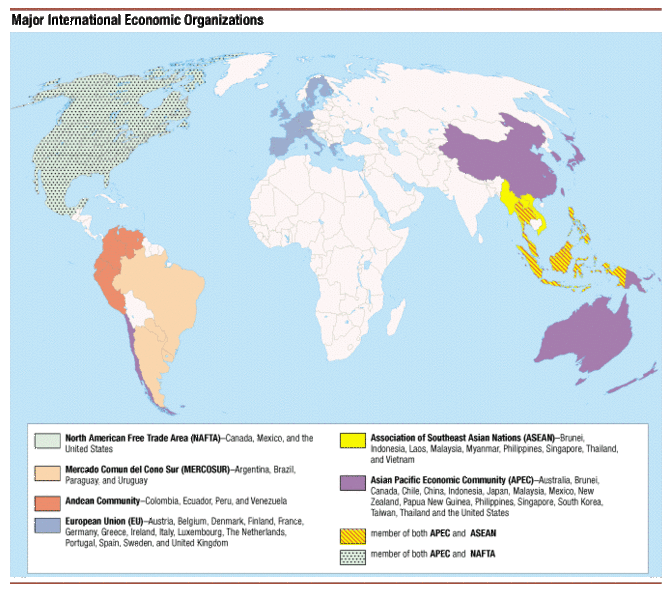
Example: NAFTA 🇺🇸🇨🇦🇲🇽 (USA, Canada, Mexico)
Purpose: No tariffs on goods traded among these countries 🚫.
Scenario: Under NAFTA, the trade of agricultural products between the US, Canada, and Mexico increased significantly. For example, US corn exports to Mexico more than tripled, benefiting American farmers and Mexican consumers with lower prices.
2.2. Customs Union
What it is: An FTA plus a common trade policy with non-members 📑.
Purpose: Free trade among members and same tariffs on goods from outside 🌍.
Scenario: Mercosur countries enjoy duty-free trade with each other while applying a common external tariff to non-member countries. This arrangement helps protect local industries while fostering regional trade.
2.3. Common Market
What it is: A customs union plus free movement of people and money 💶.
Example: European Economic Area (EEA) 🇪🇺🇮🇸🇱🇮🇳🇴 (EU countries, Iceland, Liechtenstein, Norway)
Purpose: Free movement of goods, services, people, and capital 🔄.
Scenario: Within the EEA, citizens can live and work in any member country. For instance, a Norwegian engineer can easily find employment in Germany without needing a work permit, benefiting both the individual and the economies of both countries.
2.4. Economic Union
What it is: A common market plus coordinated economic policies 📋.
Example: European Union (EU) 🇪🇺
Members: 27 European countries
Purpose: Shared market and policies, some use the Euro (€).
Scenario: The EU coordinates policies on various economic issues such as agriculture and regional development. The adoption of the Euro by 19 member countries simplifies transactions and travel, enhancing economic integration.
2.5. Political Union
What it is: An economic union plus political integration 🏛️.
Example: EU (moving towards this) 🇪🇺
Purpose: Shared institutions and partial political integration 🏛️.
Scenario: The EU has its own parliament and judiciary, and member states work together on many policies, including foreign affairs and security. This level of integration aims to create a more unified and strong political entity on the global stage.
3. Conclusion
🌐Wrapping Up the World of Global Economics!! Global economic organizations and trade agreements are the backbone of international cooperation and economic stability. They provide crucial support during financial crises, fund essential development projects, and manage trade rules and disputes. Understanding these entities helps us grasp the complexities of the global economy and the efforts to achieve stability, growth, and prosperity. Through teamwork and shared goals, these institutions and agreements build a more connected and resilient world economy. So, next time you hear about a financial crisis or a new trade deal, you’ll know who’s behind the scenes making it all work!
Click here for Malayalam Translation👈
ലോക ആര്ഥിക സംഘടനകളും വ്യാപാര ഉടമ്പടികളും
🌍 ലോകം ആര്ഥിക വിശാലതയിലേക്ക് സ്വാഗതം! 🌍
രാജ്യങ്ങള് എങ്ങനെ അവരുടെ ധനകാര്യങ്ങള് കൈകാര്യം ചെയ്യുന്നു, അടിസ്ഥാനസൗകര്യങ്ങള് വികസിപ്പിക്കുന്നു, അല്ലെങ്കില് വ്യാപാര വിവാദങ്ങള് പരിഹരിക്കുന്നു എന്ന് എപ്പോഴെങ്കിലും ചിന്തിച്ചിട്ടുണ്ടോ? ഇതെല്ലാം നടപ്പാക്കുന്ന ആഗോള ആര്ഥിക സംഘടനകളും വ്യാപാര ഉടമ്പടികളും പരിചയപ്പെടൂ! ഈ സ്ഥാപനങ്ങള് ആര്ഥികങ്ങളെ സ്ഥിരതയാക്കാനും, വികസന പദ്ധതികള്ക്ക് ധനം നല്കാനും, അന്താരാഷ്ട്ര വ്യാപാരത്തിനുള്ള നയങ്ങള് സൃഷ്ടിക്കാനുമാണ് സഹായിക്കുന്നത്. അവരുടെ പങ്കും അവരുടെ സ്വാധീനം കാണിക്കുന്ന ചില യഥാര്ഥ ഉദാഹരണങ്ങളും പരിശോധിക്കാം.
ചെയ്യുന്നത്: ദരിദ്ര രാജ്യങ്ങളില് വികസന പദ്ധതികള്ക്ക് ധനം നല്കുന്നു 🌍.
ഉദാഹരണം: കെനിയയിലെ പുതിയ ഹൈവേയുടെ വികസനത്തിന് ലോക ബാങ്ക് ധനം നല്കി 🚧.
സംഭവം: 2011-ല്, ലോക ബാങ്ക് കെനിയയുടെ ഗതാഗത മേഖല മെച്ചപ്പെടുത്തുന്നതിന് $300 മില്ല്യണ് അനുവദിച്ചു. ഈ ഹൈവേ വ്യാപാരവും യാത്രകളും മെച്ചപ്പെടുത്തുകയും, ചരക്കുകളും ആളുകളും എത്തിക്കുന്നതിന് സമയവും ചെലവും കുറയ്ക്കുകയും ചെയ്തു.
ലോക വ്യാപാര സംഘടന (ഡബ്ല്യുടിഒ)
സ്ഥാപിച്ചത്: 1995 🏢 (1948-ല് സ്ഥാപിതമായ ജാറ്റിന് പകരമായി)
ചെയ്യുന്നത്: ആഗോള വ്യാപാര നിയമങ്ങളും വിവാദങ്ങളും നിയന്ത്രിക്കുന്നു 🌐.
ഉദാഹരണം: യു.എസ്.യും ചൈനയും തമ്മിലുള്ള ഇലക്ട്രോണിക്സ് നികുതി സംബന്ധിച്ച വ്യാപാര വിവാദം ഡബ്ല്യുടിഒ പരിഹരിച്ചു 📦.
സംഭവം: 2019-ല്, എയര്ക്രാഫ്റ്റ് നിര്മ്മാതാക്കളായ ബോയിംഗ്, എയര്ബസ് എന്നിവയ്ക്ക് നികുതി നല്കുന്നതിനെക്കുറിച്ചുള്ള യു.എസ്.യുമായുള്ള വിവാദത്തില് ഇ.യു.ക്ക് അനുകൂലമായി ഡബ്ല്യുടിഒ വിധി പുറപ്പെടുവിച്ചു. ബോയിംഗിന് ലഭിച്ച അനധികൃത സബ്സിഡികളുടെ പ്രതികരണമായി $7.5 ബില്ല്യണ് മൂല്യമുള്ള യു.എസ്. സാധനങ്ങള്ക്ക് നികുതി നല്കാന് ഡബ്ല്യുടിഒ അനുമതി നല്കി.
ആര്ഥിക സഹകരണ വികസന സംഘടന (ഒഇസിഡി)
സ്ഥാപിച്ചത്: 1961 🏛️
ഹെഡ്ക്വാര്ട്ടര്സ്: പാരിസ്, ഫ്രാന്സ് 🇫🇷
ചെയ്യുന്നത്: രാജ്യങ്ങളെ സാമ്പത്തിക നയങ്ങള് സംബന്ധിച്ച് ഉപദേശിക്കുന്നു 📊.
ഉദാഹരണം: മെക്സിക്കോയുടെ വിദ്യാഭ്യാസ സമ്പ്രദായം മെച്ചപ്പെടുത്താനും, സാമ്പത്തിക വളര്ച്ചയെ ഉത്തേജിപ്പിക്കാനും ഒഇസിഡി ഉപദേശം നല്കി 📚.
സംഭവം: 2018-ല്, ഒഇസിഡി മെക്സിക്കോയുടെ വിദ്യാഭ്യാസ സമ്പ്രദായത്തെ കുറിച്ച് ഒരു റിപ്പോര്ട്ട് പ്രസിദ്ധീകരിച്ചു, അധ്യാപക ഗുണനിലവാരവും വിദ്യാര്ഥി ഫലങ്ങളും മെച്ചപ്പെടുത്തുന്നതിനുള്ള പുനര്വിന്യാസങ്ങള് ശുപാര്ശ ചെയ്തു. ഈ ശുപാര്ശകള് അസമത്വം കുറയ്ക്കാനും സാമ്പത്തിക വളര്ച്ചയെ പിന്തുണയ്ക്കാനും ഉദ്ദേശിച്ചു.
ചെയ്യുന്നത്: കേന്ദ്ര ബാങ്കുകള്ക്ക് പിന്തുണ നല്കുന്നു, സാമ്പത്തിക സ്ഥിരത ഉറപ്പാക്കുന്നു 💹.
ഉദാഹരണം: 2008 സാമ്പത്തിക പ്രതിസന്ധി സമയത്ത് BIS കേന്ദ്ര ബാങ്കുകളെ സഹകരിപ്പിച്ചു, ആഗോള വിപണികളെ സ്ഥിരതയാക്കുന്നു 📉.
സംഭവം: 2008 സാമ്പത്തിക പ്രതിസന്ധി സമയത്ത് BIS കേന്ദ്ര ബാങ്കുകള്ക്ക് തമ്മിലുള്ള ആശയവിനിമയം എളുപ്പമാക്കി, പലിശ നിരക്ക് കുറക്കല്, ദ്രാവകത്വ പിന്തുണ പോലുള്ള നടപടികള് കോര്ഡിനേറ്റ് ചെയ്തു. ഈ സഹകരണം ആഗോള സാമ്പത്തിക വ്യവസ്ഥയുടെ പൂര്ണ തകര്ച്ചയെ തടയാന് നിര്ണായകമായിരുന്നു.
യുഎന് വ്യാപാരവും വികസനവും സംബന്ധിച്ച സമ്മേളനം (UNCTAD)
ചെയ്യുന്നത്: വികസന രാജ്യങ്ങളിലെ ആഗോള വ്യാപാരത്തിന് സഹായിക്കുന്നു 📈.
ഉദാഹരണം: UNCTAD വിയറ്റ്നാമിന്റെ വ്യാപാര നിയമങ്ങള് മെച്ചപ്പെടുത്താനും, കൂടുതല് വിദേശ ബിസിനസുകളെ ആകര്ഷിക്കാനും സഹായിച്ചു 🌐.
സംഭവം: 2000-കളുടെ ആദ്യം, UNCTAD വിയറ്റ്നാമിന്റെ വ്യാപാര നയങ്ങളും നിയമങ്ങളും നവീകരിക്കാന് സഹായിച്ചു. ഈ സഹായം 2007-ല് വിയറ്റ്നാം WTO-യിലേയ്ക്കു ചേര്ന്നതിന്റെ ഭാഗമായിരുന്നു, ഇത് വ്യാപാരത്തെയും സാമ്പത്തിക വളര്ച്ചയെയും ഗണ്യമായി ഉയര്ത്തി.
വ്യാപാര ഉടമ്പടികള്
സ്വതന്ത്ര വ്യാപാര പ്രദേശം (FTA)
അത് എന്താണ്: രാജ്യങ്ങള് പരസ്പരം വ്യാപരിക്കുന്ന സാധനങ്ങളിലെ നികുതികള് നീക്കം ചെയ്യുന്നു 📦.
ഉദാഹരണം: NAFTA 🇺🇸🇨🇦🇲🇽 (യു.എസ്.എ, കാനഡ, മെക്സിക്കോ)
ഉദ്ദേശ്യം: ഈ രാജ്യങ്ങള് തമ്മില് വ്യാപാരിക്കുന്ന സാധനങ്ങള്ക്ക് നികുതി ഇല്ല 🚫.
സംഭവം: NAFTA-യുടെ കീഴില്, യു.എസ്., കാനഡ, മെക്സിക്കോ തമ്മിലുള്ള കാര്ഷിക ഉല്പന്നങ്ങളുടെ വ്യാപാരം ഗണ്യമായി ഉയര്ന്നു. ഉദാഹരണത്തിന്, മെക്സിക്കോയിലേക്ക് യു.എസ്. മുളക് കയറ്റുമതി മൂന്നിരട്ടിയായി, അമേരിക്കന് കര്ഷകര്ക്കും മെക്സിക്കോയിലെ ഉപഭോക്താക്കള്ക്കും കുറഞ്ഞ വിലയില് നന്മകള് ലഭിച്ചു.
കസ്റ്റംസ് യൂണിയന്
അത് എന്താണ്: FTA കൂടാതെ അംഗമല്ലാത്തവരുമായി ഒരു പൊതുവ്യപാരനയം 📑.
ഉദാഹരണം: മെർക്കosur 🇦🇷🇧🇷🇵🇾🇺🇾 (അർജന്റീന, ബ്രസീൽ, പരാഗ്വേ, ഉറുഗ്വേ)
ഉദ്ദേശ്യം: അംഗങ്ങളിടയിലെ സ്വതന്ത്ര വ്യാപാരം, പുറത്തെ സാധനങ്ങൾക്ക് സമാന നികുതികൾ 🌍.
സംഭവം: ഒരു കസ്റ്റംസ് യൂണിയനിൽ ഉള്ള രാജ്യങ്ങൾ പരസ്പരം മിനുസമുള്ള വ്യാപാരത്തിന് ആനുകൂല്യം അനുഭവിക്കുന്നു, ആന്തരിക സാമ്പത്തിക സഹകരണവും എളുപ്പമാക്കുന്നു.
കാമണ് മാര്ക്കറ്റ്
അത് എന്താണ്: ഒരു കസ്റ്റംസ് യൂണിയന് കൂടാതെ ആളുകളുടെയും പണത്തിന്റെയും സ്വതന്ത്ര പ്രചാരം 💶.
ഉദാഹരണം: യൂറോപ്യന് സാമ്പത്തിക പ്രദേശം (EEA) 🇪🇺🇮🇸🇱🇮🇳🇴 (EU രാജ്യങ്ങൾ, ഐസ്ലാന്ഡ്, ലിച്ചൻസ്റ്റെയിൻ, നോര്വേ)
ഉദ്ദേശ്യം: സാധനങ്ങൾ, സേവനങ്ങൾ, ആളുകൾ, മൂലധനം എന്നിവയുടെ സ്വതന്ത്ര പ്രചാരം 🔄.
സംഭവം: കാമണ് മാര്ക്കറ്റിനുള്ളിലെ പൗരന്മാരും ബിസിനസ്സുകളും ഏതെങ്കിലും അംഗരാജ്യത്തും ജീവിക്കുകയും, ജോലി ചെയ്യുകയും, നിക്ഷേപിക്കുകയും ചെയ്യാനുള്ള സ്വാതന്ത്ര്യം അനുഭവിക്കുന്നു, വന് സാമ്പത്തിക സംയോജനത്തെയും ഉച്ചനേട്ടത്തെയും പിന്തുണയ്ക്കുന്നു.
സാമ്പത്തിക യൂണിയന് അത് എന്താണ്:
ഒരു കാമണ് മാര്ക്കറ്റ് കൂടാതെ കോര്ഡിനേറ്റഡ് സാമ്പത്തിക നയങ്ങള് 📋.
ഉദാഹരണം: യൂറോപ്യന് യൂണിയന് (EU) 🇪🇺
അംഗങ്ങൾ: 27 യൂറോപ്യൻ രാജ്യങ്ങൾ ഉദ്ദേശ്യം: പങ്കുവെച്ച വിപണിയും നയങ്ങളും, ചിലത് യൂറോ (€) ഉപയോഗിക്കുന്നു.
സംഭവം: EU വിവിധ സാമ്പത്തിക വിഷയങ്ങളിൽ, കൃഷി, പ്രാദേശിക വികസനം എന്നിവയിലു ഒത്തുനോക്കുന്നു. 19 അംഗരാജ്യങ്ങൾ യൂറോ സ്വീകരിച്ചത് ഇടപാടുകളെയും യാത്രയെയും എളുപ്പമാക്കുന്നു, സാമ്പത്തിക സംയോജനം മെച്ചപ്പെടുത്തുന്നു. രാഷ്ട്രീയ യൂണിയന്
അത് എന്താണ്: ഒരു സാമ്പത്തിക യൂണിയന് കൂടാതെ രാഷ്ട്രീയ സംയോജനം 🏛️.
ഉദാഹരണം: EU (ഇതിലേക്ക് നീങ്ങുന്നു) 🇪🇺
ഉദ്ദേശ്യം: പങ്കുവെച്ച സ്ഥാപനങ്ങളും ഭാഗിക രാഷ്ട്രീയ സംയോജനം 🏛️.
സംഭവം: EU-ക്കു സ്വന്തം പാര്ലമെന്റും ന്യായവ്യവസ്ഥയും ഉണ്ട്, വിദേശകാര്യവും സുരക്ഷയും ഉള്പ്പെടെയുള്ള പല നയങ്ങളിലും അംഗരാജ്യങ്ങള് സഹകരിക്കുന്നു. ഈ ലെവല് ഓഫ് സംയോജനം ആഗോള അങ്കണത്തില് കൂടുതല് ഏകീകരിച്ച ശക്തമായ രാഷ്ട്രീയ ഘടകത്തെ സൃഷ്ടിക്കാന് ഉദ്ദേശിക്കുന്നു. സമാപനം
🌐 ആഗോള സാമ്പത്തികവിഷയങ്ങളുടെ ലോകം സമാപനം! 🌐 ആഗോള സാമ്പത്തിക സംഘടനകളും വ്യാപാര ഉടമ്പടികളും അന്താരാഷ്ട്ര സഹകരണത്തിന്റെ അടിസ്ഥാനവും സാമ്പത്തിക സ്ഥിരതയുടെ അടിത്തറയും ആണ്. സാമ്പത്തിക പ്രതിസന്ധികളിൽ ആവശ്യമുള്ള പിന്തുണ നൽകുന്നു, അടിസ്ഥാനപരമായ വികസന പദ്ധതികൾക്ക് ധനം നൽകുന്നു, വ്യാപാര നിയമങ്ങളും വിവാദങ്ങളും നിയന്ത്രിക്കുന്നു. ഈ സ്ഥാപനങ്ങളെ മനസ്സിലാക്കുന്നത് ആഗോള സാമ്പത്തികത്തിന്റെ സങ്കീർണതകളും സ്ഥിരതയും വളർച്ചയും സമൃദ്ധിയും നേടിയെടുക്കാനുള്ള ശ്രമങ്ങളും പിടികൂടാൻ സഹായിക്കുന്നു. ടീമിൽ പ്രവർത്തനവും പങ്കുവെച്ച ലക്ഷ്യങ്ങളും വഴി, ഈ സ്ഥാപനങ്ങളും ഉടമ്പടികളും കൂടുതല് ബന്ധിപ്പിക്കപ്പെട്ടും കരുത്തുറ്റതുമായ ആഗോള സാമ്പത്തിക വ്യവസ്ഥയെ നിർമ്മിക്കുന്നു. ആഗോള സാമ്പത്തിക പ്രതിസന്ധി അല്ലെങ്കിൽ പുതിയ വ്യാപാര ഉടമ്പടി എന്നുകേൾക്കുമ്പോൾ, അത് നടപ്പാക്കുന്നതിന് പിന്നിലെ ആളുകളെ നിങ്ങൾക്ക് അറിയാം!
Life often unfolds in unexpected ways, defying our plans and expectations. While some individuals meticulously set and achieve their goals in education or career, others experience a more unpredictable journey. This diversity of experiences is evident even among the most successful individuals, including billionaires and top niche leaders.
I hope you’ll may be knowing many stories….
If I say about Bill Gates he created the Microsoft Company even he was unsuccessful during his starting career but today many people working under him…..the software we all use
Story:
👨💼 Bill Gates’ fascination with computers began in his teenage years at Lakeside School in Seattle. In 1970 at the age of 15, he and Paul Allen launched their first venture, Traf-O-Data, to process traffic data. Gates dropped out of Harvard in 1975 to found Microsoft in Albuquerque, New Mexico. Despite early challenges, their big break came with MS-DOS, securing a deal with IBM in 1980. Gates’ leadership propelled Microsoft to become a global tech giant, revolutionizing the industry with products like Windows, Office, and Xbox. Today, Microsoft’s impact on technology is profound, thanks to Gates’ entrepreneurial vision and relentless pursuit of innovation. 🚀
Why say Mark Zuckenberg he was a young billonare who created facebook & Instagram during his young age by experimenting by many ways….
Story:
🚀 Mark Zuckerberg, born in 1984, showed early interest in computers and programming. While at Harvard, he created “Facemash,” a controversial but innovative website for rating attractiveness.
👨💻 In 2004, at the age of 20, Zuckerberg co-founded Facebook from his Harvard dorm room, initially for university connections but rapidly expanding to the public, becoming the largest social media platform globally.
📸 In 2012, at the age of 28, Facebook acquired Instagram, a photo-sharing app founded by Kevin Systrom and Mike Krieger, further expanding Zuckerberg’s influence in the social media landscape.
🔥 Despite facing controversies like privacy concerns and regulatory challenges, Zuckerberg’s relentless drive and vision have cemented him as one of the most influential figures in the tech industry, shaping the way we communicate and interact online.
Owner of Loui Vitton was also not much successful at start but eventually became….
Story:
🧳 Louis Vuitton, born in 1821, started as a trunk maker’s apprentice at age 13 in eastern France. His dedication led to a reputation for high-quality trunks.
🏙️ In 1854, at age 33, he founded his own company and opened his first store in Paris, introducing innovative designs like flat-top trunks.
✈️ Vuitton’s breakthrough came in 1858 with the invention of the flat-bottom trunk, perfect for train travel, propelling him to success.
🌟 Over time, Louis Vuitton’s brand became synonymous with luxury and craftsmanship, expanding its product range to include leather goods, handbags, and accessories.
👜 Today, Louis Vuitton is a global luxury fashion house known for its iconic monogrammed canvas and timeless designs, inspiring entrepreneurs with the importance of innovation and perseverance.
These are only just some examples….
Other examples are TATA group, Indian prime minister, Obama & many more examples….
TATA group story:
🌟 Jamsetji Tata, born in 1839 in Navsari, Gujarat, India, came from a family of Parsi priests. However, he had a different calling – entrepreneurship and industrialization.
⚙️ In the late 19th century, Jamsetji recognized the need for India to embrace industrialization to break free from colonial dependence and uplift its economy. He saw immense potential in establishing indigenous industries.
🏭 In 1868, at the age of 29, Jamsetji founded what would become the Tata Group with the establishment of a small textile mill in Nagpur, Central India. This marked the beginning of his journey as an industrialist.
🔧 Over the years, Jamsetji expanded the Tata Group’s presence into various industries, including steel, power, hospitality, and education. His most significant achievement was the establishment of the Tata Iron and Steel Company (TISCO) in 1907, which laid the foundation for India’s modern steel industry.
💼 Jamsetji’s vision went beyond business profits. He believed in using wealth for the betterment of society and pioneered corporate social responsibility in India. He founded educational and research institutions, including the Indian Institute of Science (IISc) in Bangalore.
🌍 Jamsetji’s values of integrity, innovation, and social responsibility became the guiding principles of the Tata Group, shaping its culture and ethos for generations to come.Today, the Tata Group stands as a testament to Jamsetji Tata’s pioneering spirit and his belief in the power of business to drive positive change in society. His legacy continues to inspire entrepreneurs and leaders worldwide.
My Journey😅:
“In life, opportunities abound, and while some meticulously plan their career paths, mine has been more like a roller coaster ride, marked by various career shifts. Like i did Bachelors in Chemistry & Masters in Microbiology & doing something always new….😅😂 But anyways I trust in the guidance of a higher power God to steer me along the right path.
As for hobbies and skills, I’ve set personal goals. It might sound amusing, but I’ve aimed to pursue certain activities. For instance, I’ve ventured into blogging and vlogging. Though I haven’t yet reached a professional level, I remain hopeful. While some readers may notice areas for improvement, I believe in the journey of growth and learning.”
Hope you found it informative. If any suggestions let me know in the comments below🙂🙂
Regards,
Rittu Sara Raju
“🔍 Don’t worry if you haven’t figured out your career path yet. Life is full of surprises, and sometimes the best opportunities come when you least expect them.”









 Lifestyle Science & health