Emperor Palpatine has announced open elections for a new Emperor — and he’s nominated Darth Vader. You get to nominate one challenger.
If I could nominate one challenger to run against Darth Vader, I would choose Anakin Skywalker—the Jedi Knight he was before falling to the dark side.
Anakin was not only a powerful Jedi but also a courageous leader and mentor. During the Clone Wars, he guided and trained his Padawan, Ahsoka Tano, helping her grow into one of the galaxy’s most respected warriors. Despite his flaws, Anakin genuinely cared about those around him and always fought to protect others.
What makes Anakin such an interesting choice is that he represents both the light and dark sides of the Force. An election between Anakin and Darth Vader would symbolize a choice between hope and fear, compassion and control.
I would vote for the Anakin who inspired others, stood by his friends, and believed in protecting the people of the galaxy. After all, true leadership is about serving others, not ruling through fear.
Daily writing prompt
Emperor Palpatine has announced open elections for a new Emperor — and he’s nominated Darth Vader. You get to nominate one challenger.
History often remembers kings, wars, and famous rulers, but many underrated scientists, inventors, and mathematicians changed the world through discoveries that still affect our daily lives today. From the electricity powering our homes to the phones, computers, Wi-Fi, medicines, and internet we use every day, these brilliant minds helped shape modern civilization.
One of the most inspiring figures in history is Marie Curie. She studied physics, chemistry, and radioactivity and discovered the elements radium and polonium. Her groundbreaking research transformed modern medicine and scientific research. Today, her discoveries are used in cancer radiation therapy, medical imaging like X-rays, and nuclear science. Because of her revolutionary contribution, a radioactive element called Curium was later named in honor of Marie Curie and her husband Pierre Curie. She also became the first woman to win a Nobel Prize and the first person to win Nobel Prizes in two different sciences.
Another underrated genius was Nikola Tesla, whose inventions changed the way electricity is supplied across the world. Tesla developed the Alternating Current (AC) electricity system, which powers modern homes, cities, factories, computers, and charging systems today. Without Tesla’s work, modern electrical infrastructure would be completely different.
The modern computer age owes a huge debt to Alan Turing, who developed the foundations of computer science and artificial intelligence. His concept of the “Turing Machine” became the basis of modern computers, smartphones, apps, cybersecurity systems, and AI technologies. Similarly, Ada Lovelace is considered the world’s first computer programmer because she wrote one of the earliest computer algorithms long before modern computers even existed.
Wireless communication technology also has contributions from underrated innovators. Hedy Lamarr developed frequency-hopping communication technology, which later became important for Wi-Fi, Bluetooth, GPS, and wireless communication systems. Indian scientist Jagadish Chandra Bose was another pioneer of wireless communication and radio science. His early experiments with radio waves and microwaves contributed to technologies that later influenced wireless communication systems used worldwide.
Technology connected to computers and pen drives also has an Indian connection. Ajay Bhatt helped develop USB (Universal Serial Bus) technology while working at Intel. USB technology became the foundation for pen drives, keyboards, printers, phone chargers, external storage devices, and many modern electronic accessories.
India also produced one of history’s greatest mathematical minds, Srinivasa Ramanujan. Despite limited formal training, he developed extraordinary mathematical formulas involving infinite series, number theory, and partition theory. His mathematical concepts are still used today in computer science, cryptography, physics, and data security systems that protect online banking and digital communication.
Another legendary Indian scientist was C. V. Raman, who discovered the Raman Effect.This discovery explained how light changes after interacting with molecules and became the foundation of Raman spectroscopy, a technique now widely used in pharmaceutical research, medical diagnostics, chemistry, and space science.
In biology and genetics, Rosalind Franklin played a critical role in revealing the structure of DNA through her X-ray diffraction images. Her work became the foundation for modern genetics, biotechnology, and disease research. Similarly, Gregor Mendel discovered the basic laws of genetics through pea plant experiments and later became known as the “Father of Genetics.”
Another revolutionary contribution to modern civilization came from Orville Wright and Wilbur Wright, popularly known as the Wright brothers. They successfully invented and flew the world’s first powered aircraft, turning the dream of human flight into reality. Their invention transformed global transportation, tourism, trade, and modern aviation, eventually leading to the development of airplanes used worldwide today.
These underrated people in history may not always receive the same recognition as political leaders or famous rulers, but their discoveries quietly built the modern world. Every time we use a phone, connect to Wi-Fi, charge a laptop, undergo medical treatment, or access the internet, we are benefiting from the ideas and inventions of these remarkable minds.
“These are just some of the underrated minds in history — there are many more scientists, inventors, and thinkers whose contributions quietly shaped the modern world we live in today.”
You get some great, amazingly fantastic news. What’s the first thing you do?
“The first thing I’d do when I get amazingly fantastic news is thank God and then share it with my loved ones. But honestly, it also depends on the kind of news 😅 Some news calls for celebration, some for quiet gratitude, and some for planning the next steps—because some moments need a cake, some need a deep breath, and some need a notebook.”
In everything give thanks.
1 Thessalonians 5:18
1–2 minutes
Daily writing prompt
You get some great, amazingly fantastic news. What’s the first thing you do?
For decades, the pipeline for new antibiotics ran dry. We were facing a silent pandemic of antimicrobial resistance (AMR), where common infections once easily treated were becoming deadly again. The rise of “superbugs” like MRSA and drug-resistant Gonorrhea loomed large, threatening to send us back to a pre-antibiotic era. But as of early 2026, a new hero has emerged in this fight: Artificial Intelligence.
AI isn’t just speeding up discovery; it’s fundamentally changing how we find and design life-saving drugs. Welcome to the second golden age of antibiotics.
From Haystacks to Blueprints: AI’s New Approach
Historically, finding new antibiotics was like searching for a needle in an immense chemical haystack. Scientists would screen thousands upon thousands of compounds, hoping to stumble upon one that killed bacteria without harming humans. It was slow, expensive, and increasingly fruitless.
”Enter AI” is the moment the narrative shifts from “human struggle” to “machine-augmented triumph.” It marks the transition from the Antibiotic Winter (1980s–2010s) to the Digital Spring.
1. The Shift from Luck to Logic
Before AI, discovery was often accidental (like Fleming finding mold on a petri dish). “Enter AI” means we now use Deep Learning to see patterns in molecular structures that are invisible to the human eye.
The Halicin Example: In 2019, the AI wasn’t told what an antibiotic looks like; it was told to find molecules that behave like one. It identified Halicin (originally a failed diabetes drug) because it “saw” a unique way the molecule could disrupt the flow of protons across a bacterial membrane.
2. Sifting Through the “Chemical Universe”
There are an estimated 10^{60} potential drug-like molecules—more than there are stars in the galaxy. Humans could only ever test a tiny fraction.
Enter AI: Machine learning models act as a high-speed “sifter.” In the case of Abaucin (discovered in 2023), AI screened 6,680 compounds in an afternoon and narrowed them down to 240 for physical testing. This would have taken humans years of manual labor.
3. The 2026 Context: Generative vs. Predictive
When you write “Enter AI” today, you are talking about Generative Chemistry.
Predictive AI (2019): “Does this existing molecule work?”
Generative AI (2026): “I need a molecule that is shaped like this and sticks to that specific bacterial protein. Build it for me.”
Enter AI. Early breakthroughs saw machine learning models rapidly sifting through existing databases, identifying compounds that humans had overlooked. The antibiotic Halicin, discovered by MIT in 2019, was a prime example. AI predicted it would kill bacteria, and it worked, even against notoriously tough pathogens like C. diff and Tuberculosis.
But today, AI has evolved beyond just screening. We’ve moved into the realm of Generative AI, where the intelligence isn’t just finding existing solutions; it’s creating entirely new ones from scratch.
Designing Drugs “From Atom One”
In late 2025, MIT’s groundbreaking Antibiotics-AI Project announced two game-changing compounds: NG1 and DN1. These weren’t repurposed drugs; they were designed molecule by molecule by AI:
NG1: This compound was specifically engineered to combat drug-resistant Gonorrhea. It targets a bacterial protein called LptA, crucial for building the outer membrane – a target that human chemists had previously struggled to hit effectively.
DN1: Built atom by atom, DN1 is designed to fight MRSA (Methicillin-resistant Staphylococcus aureus), a notorious hospital superbug. The AI started with fundamental chemical elements and iteratively constructed a molecule lethal to bacteria but safe for human cells.
This capability to “write” new chemical structures allows us to explore vast areas of the molecular universe that human intuition alone might never consider.
Mining the “Microbial Dark Matter”
Beyond synthetic design, AI is also uncovering ancient secrets. A massive study leveraging machine learning recently scanned the Earth’s “global microbiome”—the collective genetic material of countless microbes found in soil, oceans, and even ancient remains.
The results were astonishing: the AI identified nearly 1 million new antimicrobial molecules hidden within this genomic data. In a truly mind-bending development, researchers even used AI to “de-extinct” molecules from the DNA of Woolly Mammoths and giant sloths, discovering that these ancient proteins could still combat modern-day superbugs. It’s like finding a biological time capsule filled with new weapons.
Unveiling the “How”: Mechanism of Action Solved
One of the greatest challenges in drug discovery has always been understanding the “Mechanism of Action” (MOA)—precisely how a drug kills its target. Without this understanding, clinical development is a long and risky gamble.
In October 2025, a new AI model called DiffDock, developed by researchers at McMaster and MIT, began to solve this “black box” problem. DiffDock doesn’t just identify potential drugs; it provides a 3D simulation of how the drug molecule “docks” into a bacterial cell, showing exactly which proteins it binds to and how it disrupts essential bacterial functions. This insight is poised to dramatically accelerate the drug development and FDA approval process, potentially saving years of research.
The Future is Now: Key AI-Discovered Antibiotics
The table below highlights some of the most promising AI-discovered antibiotics and their current status:
Name
Target Pathogen
Status (as of Jan 2026)
Halicin
E. coli, C. diff, TB
In advanced preclinical trials; demonstrating low human toxicity.
Abaucin
A. baumannii (Hospital superbug)
Moving toward Phase 1 clinical trials, showing promise against a particularly tenacious pathogen.
NG1 / DN1
Gonorrhea / MRSA
The most recent generative AI successes (2025); currently undergoing “refinement” by Phare Bio, a leading AI drug discovery company.
A Glimmer of Hope in the War Against Superbugs
The ability of AI to explore novel chemical spaces, discover hidden molecules in ancient biology, and rapidly elucidate complex mechanisms of action has reignited hope in the fight against antimicrobial resistance. We are no longer limited by human intuition or the slow pace of traditional lab work. With AI as our ally, we are now better equipped than ever to outsmart the evolving threats of superbugs and secure a healthier future.
I have curated a list of the primary research papers and news reports from the leading institutions mentioned MIT, University of Pennsylvania, and Nature Microbiology.
”In a study published in Nature Microbiology, researchers from MIT and McMaster University demonstrated how the AI tool DiffDock can visualize a drug’s ‘docking’ process…”
”According to MIT News, the newly generated compound NG1 targets the LptA protein, a mechanism never before exploited by human-designed drugs.”
If you started a sports team, what would the colors and mascot be?
If I were to start a sports team, I would choose green 💚, purple 💜, and pink 🌸 as the team colors. Green 💚 represents growth, energy, and resilience—the strength to keep moving forward. Purple 💜 symbolizes power, ambition, and leadership, giving the team a royal and confident identity. Pink 🌸 adds a bold touch, representing confidence, creativity, and fearlessness, while helping the team stand out.
The mascot would be a lion 🦁 or an eagle 🦅. The lion 🦁, known as the king of the jungle, represents strength, courage, and leadership. The eagle 🦅 symbolizes sharp vision, freedom, and the ability to fly high above challenges. Together, the colors and mascot reflect a team that is powerful, fearless, and always ready to rise and win 🏆.
Regards,
Rittu Sara Raju
“Strong like a lion , fearless like an eagle —we grow , lead , and rise above every challenge.”
Rittu Sara Raju
1–2 minutes
Daily writing prompt
If you started a sports team, what would the colors and mascot be?
What technology would you be better off without, why?
Rittu Sara Raju
Hello! I hold a BSc in Chemistry, an MSc in Industrial Microbiology, and an MBA, combining scientific expertise with business understanding. I also have experience as a Research Assistant in a clinical research environment, where I was involved in laboratory-based and analytical research processes.
I have a strong interest in science, research, and communication. My work focuses on exploring the connection between science and everyday life, especially through cooking, where I discuss the molecular basis of ingredients and techniques.
I am also passionate about learning and sharing insights on the latest developments in science and technology, and presenting complex concepts in a simple and engaging manner.
In addition, I enjoy traveling, exploring different cultures, and trying new cuisines, which adds a broader perspective to my content.
If you are interested in science, research, or easy-to-understand science-based content, feel free to explore and connect. I am always open to discussions and questions.
Thank you for visiting! 😊
If I had to choose a technology I’d be better off without, I honestly can’t pick one, because today’s world is so advanced and fast-moving that every technology plays some role in our lives. We’re living in an AI generation, and if we don’t learn how to use these tools, we might get left behind. AI is everywhere now — even I use it in my daily life 😅 — but the important thing is how we use it.
Technology should never replace our creativity or thinking ability. Creativity is what leads to inventions in the first place. The people who invented the technologies we use today were creative, curious, maybe even a little crazy — and that creativity was their gift. So it’s up to each individual to use technology in a way that supports their brain, not replaces it.
Social media connects us to the world, and AI makes many tasks easier, but at the end of the day, AI can never fully replace humans. Even AI depends on humans for training and development.So in my opinion, technology is good — as long as we use it for the right purpose and in the right way. 😊 Everyone may have their own views, but this is mine.
Technology is good but use it in right way or good purpose.
“The Lord gives wisdom; knowledge and understanding come from His mouth.”— Proverbs 2:6
1–2 minutes
Daily writing prompt
What technology would you be better off without, why?
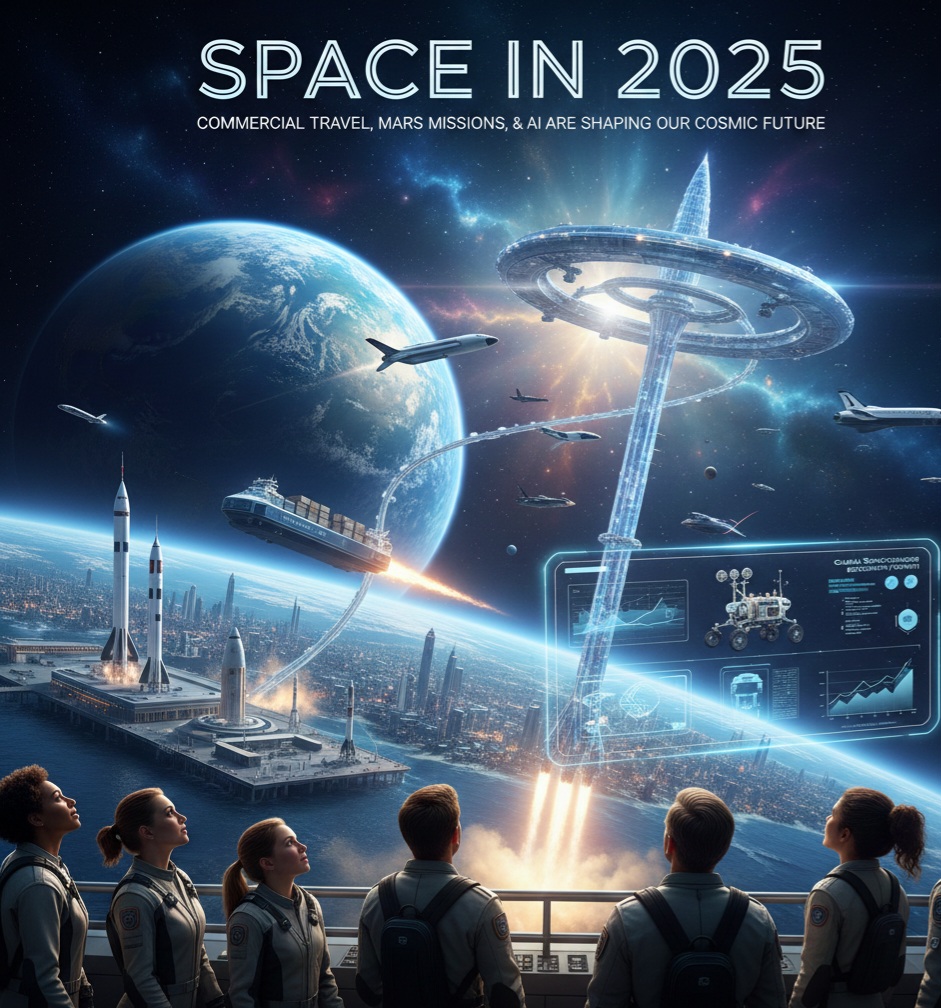
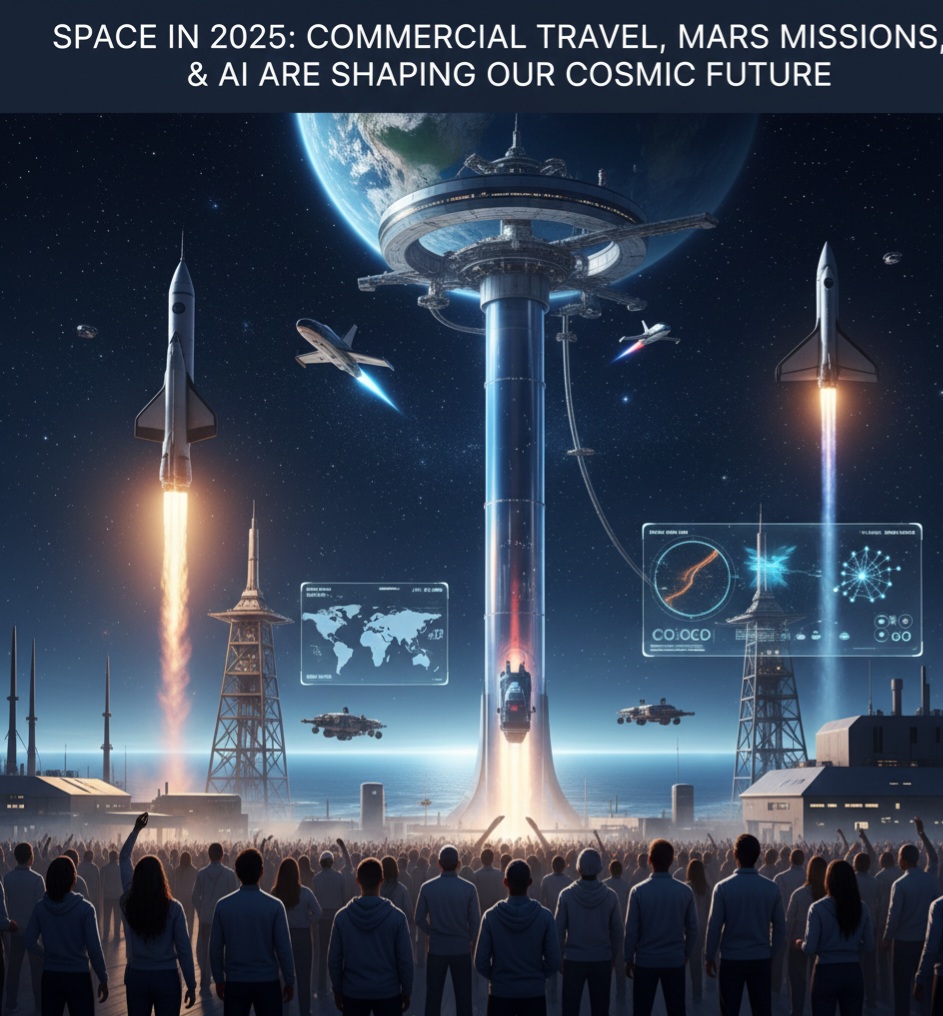
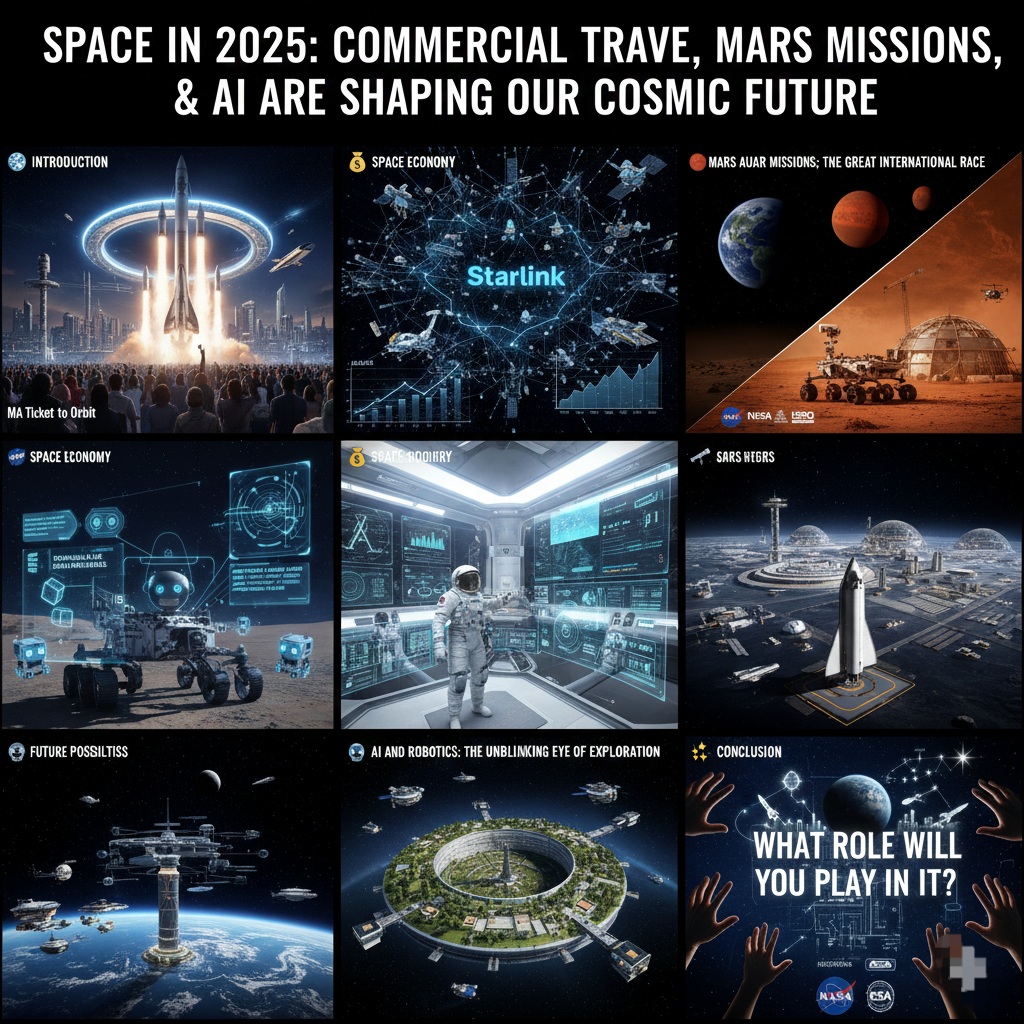
A new era dawns in 2025: From the powerful launches of traditional rockets to the futuristic marvels of commercial space stations, humanity is witnessing an unprecedented expansion into the cosmos. Private ventures, national ambitions, and advanced AI are jointly shaping our cosmic future.
Remember those old sci-fi movies where space travel was just a dream, reserved for a select few government astronauts? Well, buckle up, because the future is here, and it’s far more exciting than anyone could have imagined! What was once the exclusive domain of national space agencies has rapidly evolved into a vibrant, dynamic landscape where private companies, international collaborations, and cutting-edge technology are redefining humanity’s relationship with the cosmos.
2025 isn’t just another year on the calendar; it’s a pivotal moment for space enthusiasts and anyone curious about humanity’s next giant leap. From the thrilling expansion of commercial space tourism to ambitious missions aiming for Mars and the Moon, and the silent, intelligent power of AI guiding our robotic explorers, this year is truly a beacon for our cosmic future. Let’s dive in and explore how these incredible advancements are shaping the next era of space exploration!
2. 🚀 Commercial Space Travel: A Ticket to Orbit
Commercial Space Travel
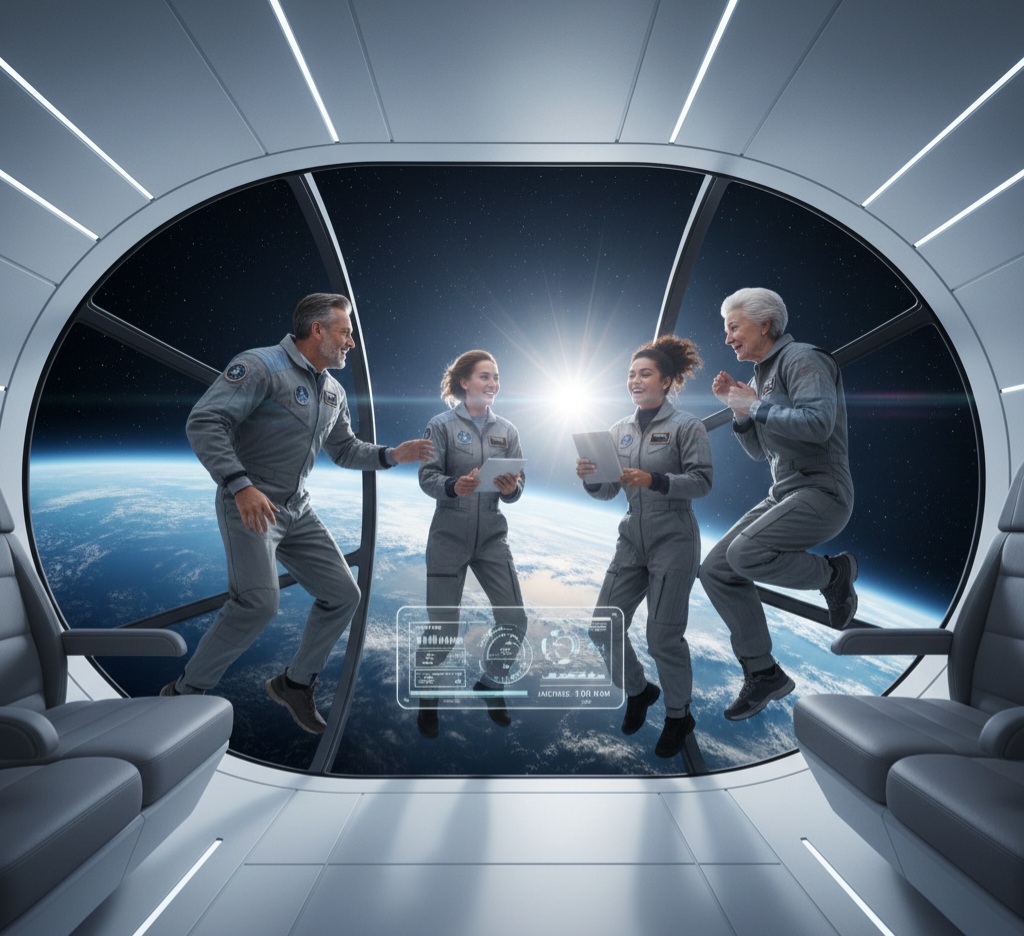
The image of an astronaut has changed. In 2025, space is no longer just for government employees; it’s a destination for high-net-worth individuals and, increasingly, for private researchers and film crews. This shift is primarily driven by three key players: SpaceX, Blue Origin, and Virgin Galactic.
2.1. The Companies and the Experience
Blue Origin (Jeff Bezos): Focused on suborbital tourism with its New Shepard rocket, Blue Origin offers a few minutes of weightlessness above the Kármán Line (the internationally recognized boundary of space). They continue to perform frequent human spaceflights in 2025, giving civilian passengers a brief but breathtaking view of Earth from space [2.1].
SpaceX (Elon Musk): SpaceX dominates the orbital and deep-space market. Through partnerships with companies like Axiom Space, SpaceX’s Crew Dragon capsule routinely ferries private astronauts for multi-week stays on the International Space Station (ISS). They are also laying the groundwork for ambitious tourist missions around the Moon with the future Starship vehicle [2.2].
Virgin Galactic (Richard Branson): While the company temporarily paused regular commercial flights in 2025 to transition to their higher-frequency Delta-class spaceplanes (with commercial flights expected to resume in 2026), they remain a key competitor in the suborbital experience market [2.3].
2.2. Cost and Who Can Go
While the long-term trend is toward lower prices, space tourism in 2025 remains highly exclusive:
Suborbital Flights: A ticket for a brief journey to the edge of space with companies like Blue Origin or Virgin Galactic costs between $250,000 and $450,000 USD[2.1, 2.4].
Orbital Missions: A week-long trip to the ISS, facilitated by companies like Axiom Space using a SpaceX Crew Dragon capsule, comes with a price tag of around $55 million USD per person [2.2, 2.5].
Despite the hefty price tag, the market is exploding. The global space tourism market is projected to grow from an estimated $1.1–$1.6 billion USD in 2025 to a staggering $18.4 billion USD by 2033, driven by high demand, advancements in reusable rocketry, and significant investment from the private sector [2.6, 2.7, 2.8].
2.3. Safety and Regulations
With increasing frequency, ensuring passenger safety is paramount. Commercial space companies adhere to rigorous testing and flight protocols. Furthermore, aspiring space tourists undergo thorough medical examinations and extensive training—lasting from a few days for short suborbital hops to several months for orbital missions—to prepare them for the physical and mental demands of space travel [2.1, 2.9].
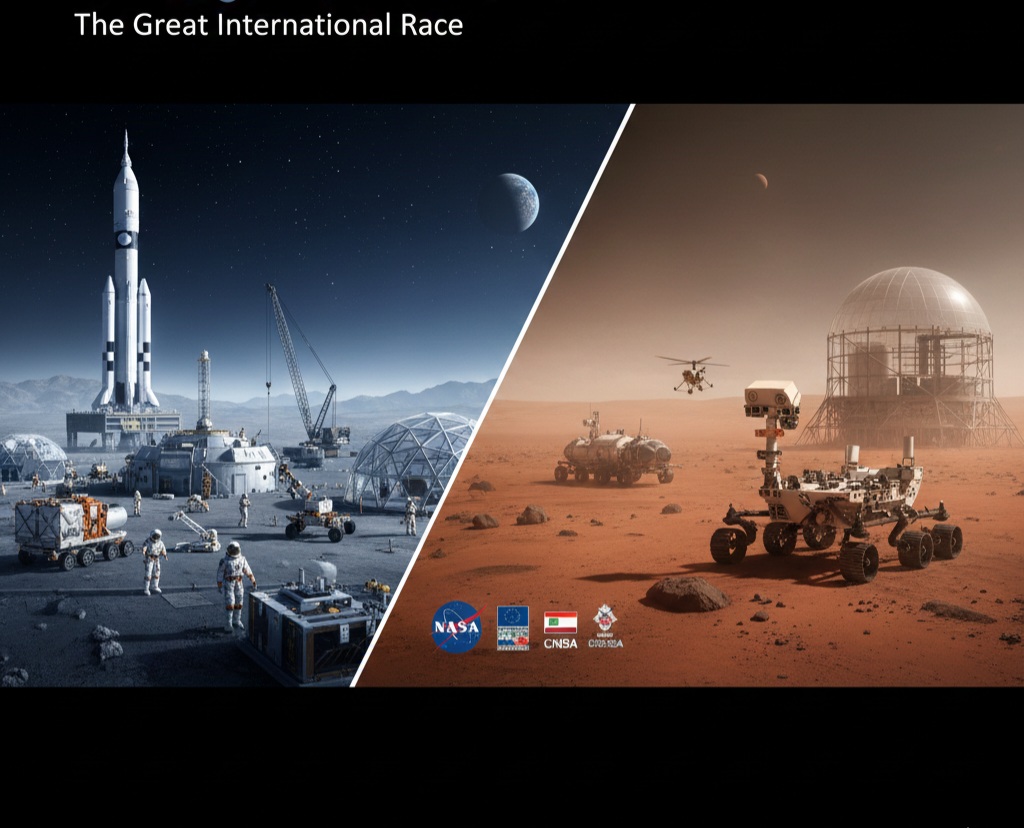
3. 🌕 Mars and Lunar Missions: The Great International Race
The Great International Race
While commercial ventures are focusing on near-Earth opportunities, national space agencies are leading the charge for the next great milestones: establishing a permanent presence on the Moon and sending humans to Mars.
3.1. Destination Moon: Artemis and International Collaboration
The Moon is no longer a distant memory; it’s the next proving ground. NASA’s Artemis Program aims to land the first woman and the next man on the Moon, with the long-term goal of establishing a sustainable base. Key international partners like the European Space Agency (ESA), India’s ISRO, and others are critical to this vision through the Artemis Accords[3.1, 3.2].
On the commercial side, missions like Blue Ghost Mission 1 successfully demonstrated the landing of commercial payloads on the lunar surface in early 2025, paving the way for the infrastructure needed for human bases [3.3].
3.2. Heading to Mars: Rovers and the Roadmap to Crewed Missions
On the Red Planet, NASA’s Curiosity and Perseverance rovers continue their remarkable work, analyzing soil, capturing stunning panoramas, and collecting samples that may hold evidence of ancient microbial life [3.4].
Meanwhile, two small NASA spacecraft, ESCAPADE, were launched in late 2024 to study how the solar wind strips away the Martian atmosphere—a key factor in preparing for future human exploration [3.5, 3.6]. While China is planning its own Mars sample-return missions for the early 2030s, the international community continues to work on the complex engineering and life support systems required for a human crewed mission, which remains the long-term goal [3.7].
4. 🤖 AI and Robotics: The Unblinking Eye of Exploration
AI and Robotics: The Unblinking Eye of Exploration
If space missions were a human body, AI would be the brain and robotics would be the hands and feet. The vast, often hazardous, and time-delayed environment of space makes real-time human control impossible for deep-space missions. This is why AI and autonomous robotics are no longer helpful tools—they are essential infrastructure[4.1, 4.2].
4.1. Navigating the Unknown
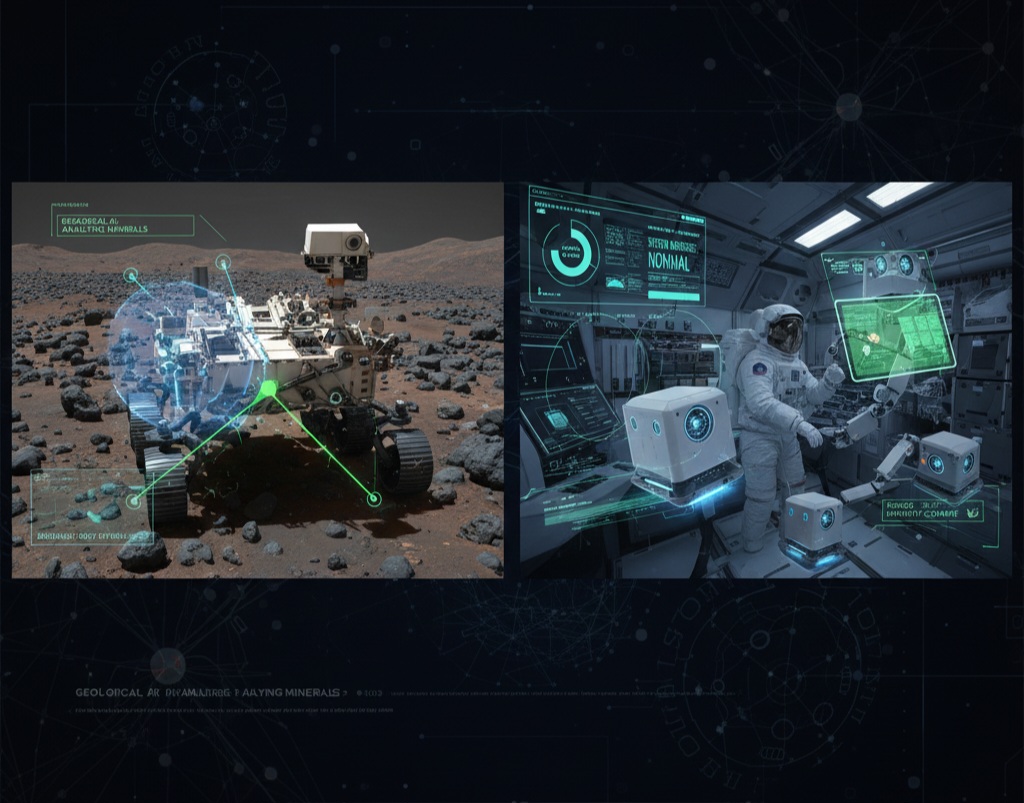
On Mars, the rovers are already showcasing the power of AI-driven autonomy.
Autonomous Navigation (AutoNav): For rovers like Perseverance, over 88% of their driving is done autonomously[4.3]. AI algorithms analyze the terrain, identify hazards (like large rocks or steep inclines), and plot the safest, most efficient path forward—all in real-time. This capability is crucial because a simple command from Earth can take over 20 minutes to reach Mars, making human teleoperation impractical [4.4].
Scientific Data Selection: AI systems like AEGIS (Autonomous Exploration for Gathering Increased Science) allow rovers to autonomously analyze images and scientific data, identifying targets of interest (e.g., a specific rock formation or mineral vein) and prioritizing them for further study, ensuring that no valuable discovery is missed while waiting for human instruction [4.5].
4.2. Robotic Assistants and Autonomous Craft
The integration of smart robotics extends beyond planetary surfaces:
Free-Flying Assistants: On the International Space Station (ISS), small, free-flying robots like Astrobee are leveraging AI algorithms, including reinforcement learning, to autonomously perform routine tasks. They monitor cabin air quality, take inventory, and act as sensor platforms, freeing up astronauts’ time for critical scientific work [4.6].
Deep Space Autonomy: As future missions push out to Jupiter’s moon Europa or Saturn’s moon Titan, AI will manage almost every aspect of the spacecraft. This includes fault detection, system diagnosis, and making course corrections without human intervention. This full autonomy is the only way to ensure mission success when communication lags are measured in hours [4.7].
In essence, AI turns expensive, fragile human explorers into powerful, hyper-efficient scientific outposts, drastically expanding the scope of what we can achieve in space.
5. 💰 The Space Economy: Billion-Dollar Ventures in Orbit
The Space Economy: Billion-Dollar Ventures in Orbit
The rise of commercial spaceflight is just one piece of a much larger puzzle: the burgeoning space economy. What was once seen as a cost center for governments is now a booming trillion-dollar industry poised to redefine global commerce and investment.
5.1. Infrastructure and Internet in the Sky
The biggest driver of the 2025 space economy isn’t tourism; it’s infrastructure:
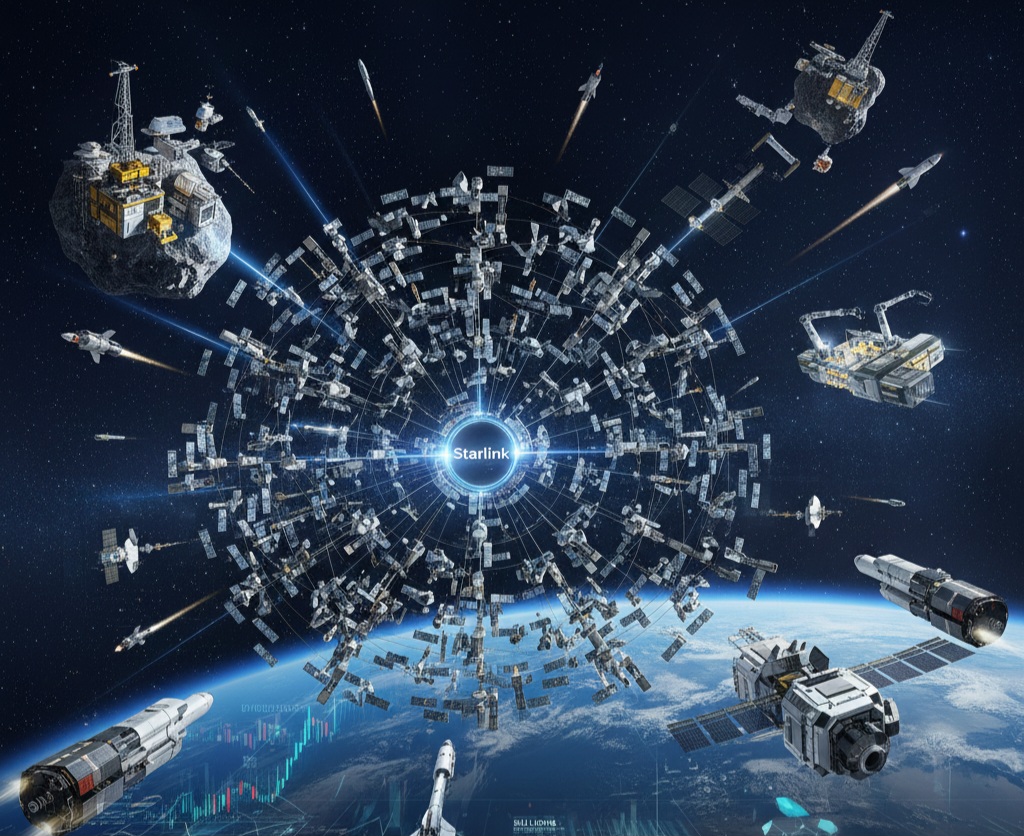
Satellite Internet: Companies like SpaceX’s Starlink and others are rapidly deploying constellations of Low-Earth Orbit (LEO) satellites to provide global, low-latency internet access. This service is transforming connectivity for remote regions, ships at sea, and military applications, representing a massive and reliable revenue stream [5.1].
On-Orbit Servicing: A growing number of startups are focusing on life-extension services for aging satellites, using robotic vehicles to refuel, repair, or reposition them. This practice saves billions in replacement costs and reduces the risk of space debris [5.2].
5.2. New Frontiers: Mining and Manufacturing
Looking ahead, investors are focusing on two long-term, high-reward sectors:
Asteroid Mining: While still in the developmental phase, the technological viability of extracting valuable resources like water (for rocket fuel) and rare metals (for use on Earth) from Near-Earth Asteroids (NEAs) is driving serious investment and planning [5.3].
Space Manufacturing: The unique microgravity environment is ideal for creating ultra-pure materials, advanced semiconductors, and even biomedical products that cannot be made on Earth. Private space stations, such as those planned by Axiom Space, will serve as orbital factories [5.4].
The convergence of reliable commercial launch systems, smart robotics, and massive data flow has made space a compelling frontier for venture capital and private equity, transforming it from a government project into the world’s next great growth sector [5.5].
6. 🔭 Future Possibilities: From Tourism to Colonization
Future Possibilities: From Tourism to Colonization
The rapid advancements we’re seeing in 2025 are not just about reaching space; they’re about staying there. The ultimate goal of many space ventures, both governmental and private, is to establish a permanent human presence beyond Earth.
6.1. Colonization Prospects: Mars, Moon, and Beyond
Lunar Bases: The Artemis Program isn’t just about landing astronauts; it’s about building a sustainable presence on the Moon. Plans include the Gateway (a lunar-orbiting outpost) and permanent habitats on the lunar surface, potentially utilizing lunar ice for water and rocket fuel. These bases will serve as critical stepping stones for deeper space exploration, including Mars [6.1].
Mars Colonization: While humans on Mars might still be a decade or more away, the preparatory work is accelerating. SpaceX’s Starship is designed with Mars colonization in mind, envisioning transporting hundreds of people and vast amounts of cargo. The development of closed-loop life support systems, radiation shielding, and in-situ resource utilization (ISRU) technologies are all progressing rapidly, bringing the dream of a multi-planetary species closer to reality [6.2, 6.3].
Beyond: Concepts for floating cities in Venus’s upper atmosphere, mining outposts on asteroids, and even orbital habitats like the O’Neill Cylinders are moving from pure science fiction to serious engineering discussions, as the fundamental technologies become more viable [6.4].
6.2. Space Tourism: Beyond the Ultra-Rich
While space tourism in 2025 is largely for the affluent, the trajectory is clear: prices will fall, and access will broaden.
Mid-2030s Projections: As launch costs continue to plummet due to reusable rockets and increased competition, experts predict that suborbital flights could become accessible to a much broader market, potentially dropping to prices comparable to a luxury cruise [6.5].
“Space Hotels”: Concepts for orbital hotels are already on the drawing board, offering longer stays with more amenities, as regular orbital flights become commonplace. Imagine waking up to a panoramic view of Earth, enjoying zero-gravity sports, or even taking a spacewalk as part of your vacation! [6.6]
The ambition is no longer just to visit space but to live, work, and thrive there, creating new economies and opportunities for humanity.
7. ✨ Conclusion: Your Role in Humanity’s Space Future
Conclusion: Your Role in Humanity’s Space Future
2025 stands out as a landmark year, not just for incremental progress, but for fundamental shifts in how humanity interacts with space. We’ve witnessed the exhilarating rise of commercial space travel, transforming astronauts from an elite few into a burgeoning community of private citizens and researchers. We’ve tracked ambitious Mars and Lunar missions, laying the groundwork for sustainable outposts beyond Earth. And we’ve seen AI and robotics emerge as indispensable partners, extending our reach and intelligence across the vastness of the cosmos.
The space economy is booming, attracting unprecedented investment and innovation, from satellite internet to the first whispers of asteroid mining. And looking ahead, the future possibilities are breathtaking, ranging from democratized space tourism to the awe-inspiring vision of human colonization on other worlds.
This isn’t just a story for scientists and billionaires; it’s a narrative for all of us. The advancements happening today will shape our future in profound ways, creating new industries, solving global challenges, and perhaps, fundamentally altering our place in the universe. As we gaze up at the night sky in 2025, it’s clearer than ever that humanity’s cosmic future isn’t just out there—it’s here, unfolding before our very eyes. What role will you play in it?
8. Citations:
[2.1] Blue Origin. (n.d.). New Shepard: Experience Space. Retrieved from https://www.blueorigin.com/new-shepard (Illustrative, as exact 2025 operations and pricing can vary)
[6.3] The Mars Society. (n.d.). Mars Colonization. Retrieved from https://www.marssociety.org/ (Illustrative of ongoing efforts and concepts).
[6.4] National Space Society. (n.d.). Space Settlements. Retrieved from https://space.nss.org/settlement/ (Discusses O’Neill Cylinders and other concepts).
[6.5] UBS. (2022). The Space Economy: Investing in the Final Frontier. (Projections for space tourism accessibility).
[6.6] Orbital Assembly. (n.d.). Voyager Station. Retrieved from https://orbitalassembly.com/ (Illustrative of commercial space hotel concepts).
There are many skills I would love to learn because life is a journey of endless learning. Knowledge is like the sea—we may never cover it all, but we can always keep sailing further and discovering more.
For me, learning new skills is not just about career growth but also about personal enrichment.
Creative skills like writing, storytelling, and design allow me to express myself in meaningful ways.
Practical skills such as coding, data analysis, and artificial intelligence (AI) are essential in today’s fast-changing digital world.
Life skills like emotional intelligence, leadership, and problem-solving help in building stronger relationships and facing challenges with confidence.
Exploration skills like learning new languages or understanding different cultures broaden my perspective and make me more adaptable.
Every new skill is like discovering a new island in the ocean of knowledge—it adds value, adventure, and wisdom to the journey.
“Wisdom is the principal thing; therefore get wisdom: and with all thy getting, get understanding.” (Proverbs 4:7)
King Solomon
Small Note:
This post includes affiliate links.
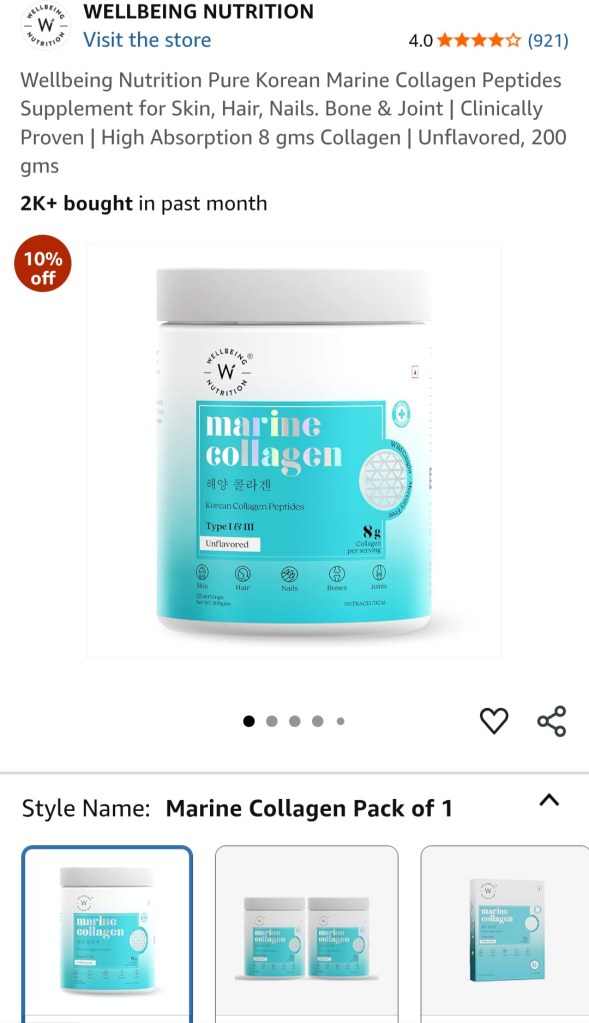
👉 Collagen is a natural protein that keeps your skin firm and bouncy — but our body makes less of it every year.That’s why I would suggest to take collagen supplements to support glow and joints.
Here’s the one I researched and will recommend personally (Click on Image)
🫀 Boost Your Heart Health Naturally!Fuel your body with the power of Omega-3 — supports heart, brain & joint health. 🌿💊 Clean, effective & easy to take.
🔗 Try this Omega-3 supplement I recommend👆 (Click on Image)
1–2 minutes
Daily writing prompt
Your life without a computer: what does it look like?
We all know helium, right? It’s that fun gas that makes balloons float and, yes, even gives you that funny high-pitched voice. But what most people don’t realize is that this seemingly simple element holds a truly astonishing secret when pushed to extreme temperatures. Forget everything you thought you knew about liquids, because when helium gets cold enough, it transforms into something truly out of this world: a superfluid.
What is Helium?
Helium (He) is an element with an atomic number of 2. It is a noble gas, meaning it is stable and does not readily react with other elements.
The Chilling Transformation: Two Peculiar Liquid States
To witness helium’s most peculiar properties, you need to cool it down – way down.
We’re talking about temperatures almost at absolute zero (-460°F or -273°C), the lowest temperature possible.
When helium is just a few degrees below its boiling point of –452°F (–269°C), it can suddenly do things that other fluids can’t.
It enters a liquid state where it can dribble through molecule-thin cracks and even climb up and over the sides of a dish.
But the real mind-bender happens when the temperature drops further.
The helium transforms into a superfluid—a liquid that flows without friction.
Imagine this:
● Defying Gravity: This isn’t just a cold liquid; it’s a liquid that flows against gravity! It will start running up and over the lip of a glass container, a sight that truly defies our everyday understanding of fluids.
● Perpetual Motion: If you set a normal liquid circulating in a cup, it will eventually stop due to atoms colliding and slowing down. But with superfluid helium? “If you did that with helium at low temperature and came back a million years later,” “it would still be moving.” This frictionless flow means that once set in motion, the atoms in superfluid helium encounter absolutely no resistance, allowing them to circulate indefinitely.
So, the next time you encounter helium, remember its hidden potential. While it might seem like a simple, playful gas, cooling it down reveals a truly astonishing side—a liquid that literally defies the laws of our everyday experience.
Small Note:
This post includes affiliate links — if you buy something, I may earn a small commission.
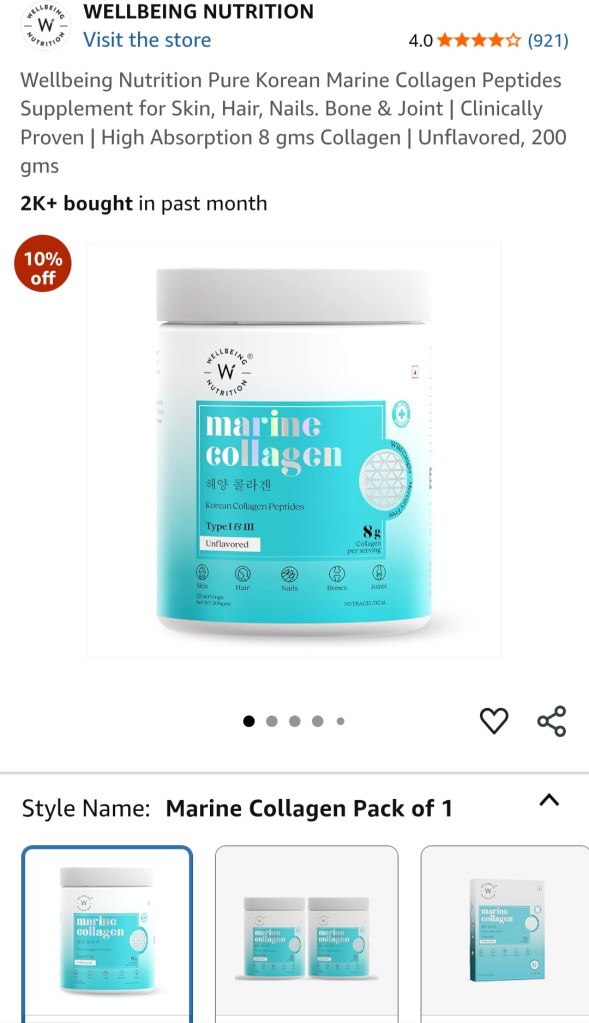
👉 Collagen is a natural protein that keeps your skin firm and bouncy — but our body makes less of it every year.That’s why I would suggest to take collagen supplements to support glow and joints.
🫀 Boost Your Heart Health Naturally!Fuel your body with the power of Omega-3 — supports heart, brain & joint health. 🌿💊 Clean, effective & easy to take.
When you’re in your 20s, people love to remind you that “things only get better with age.” And honestly? They’re not wrong.
Here’s what I genuinely think improves as we grow older — and no, it’s not just fancy wine or bank balances (though those help 😅).
💁♀️ 1. Confidence
You start worrying less about what others think and more about what you want — in friendships, in work, and in skincare routines.
With age comes clarity, boundaries, and the beautiful ability to say “no thanks” to things that don’t serve you.
🧴 2. Skincare Smarts (Collagen Enters the Chat)
At 15: “Do I really need sunscreen?” At 22: “Give me collagen, vitamin C, hyaluronic acid, and SPF 50!”
As we age, we become smarter about what our skin actually needs. 👉 Collagen is a natural protein that keeps your skin firm and bouncy — but our body makes less of it every year. That’s why I would suggest to take collagen supplements to support glow and joints.
This one hits hard. You slowly stop chasing chaos and start valuing quiet — slow mornings, warm tea, clean skincare, and journaling on Sundays. Peace really does get better with age. 🌿
💬 Final Thought:
So what gets better with age? Confidence, skin care routines, brain focus, and calm. And I’m 100% here for it — collagen and all. ✨
Explore my Immunology Made Easy for Beginners Book on Amazon
I hope you like this blog folks. If any suggestions let me know in the comments below.
Regards,
Rittu Sara Raju
📢 Small Note:
This post includes affiliate links — if you buy something, I may earn a small commission (to support my collagen fund and chai addiction).















 Lifestyle Science & health